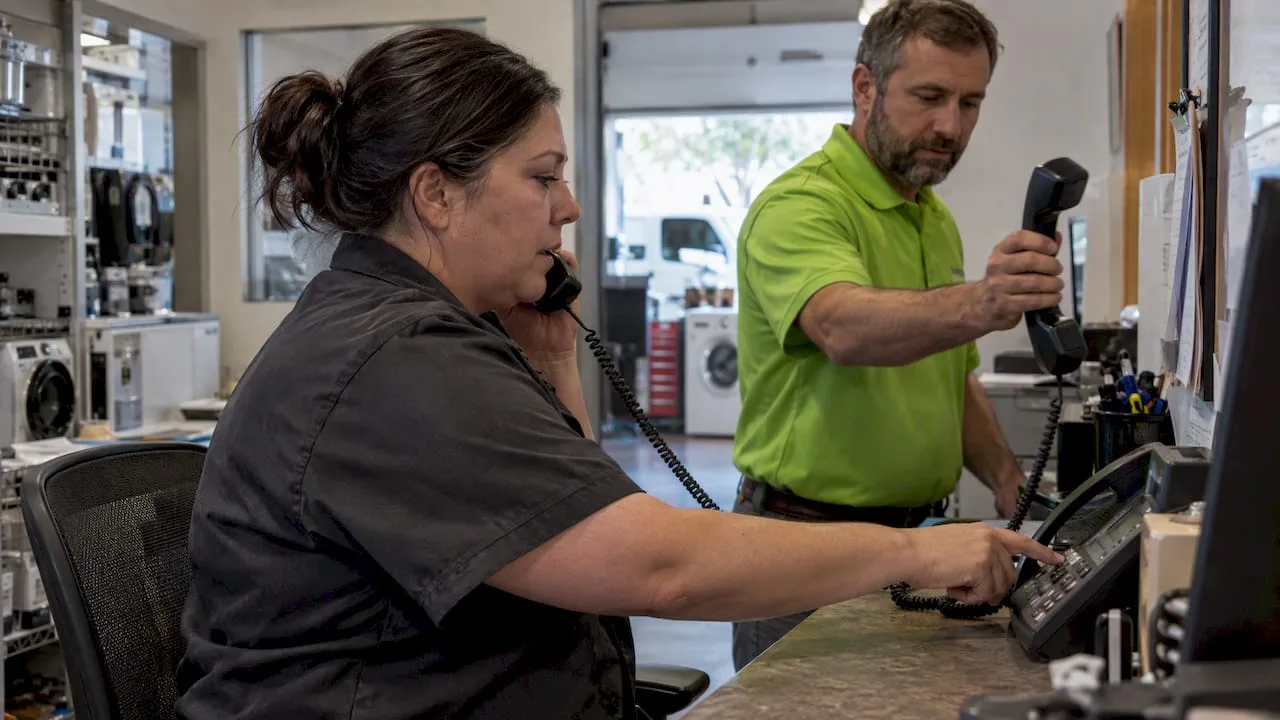
Warm Transfer Scripts: 3 Moves Busy Receptionists Can Use Now
Use these warm transfer scripts on the next call to brief agents, introduce callers, and prevent repeated explanations, with CRM and timing tips for busy...
How many customers are slipping away before you can answer?
Answer 4 quick questions and get a simple missed-call estimate for your business.
Answer with one tap. Contact details come after your result.
Here is the estimate.
Thanks. Your result was received.
A warm transfer means briefing a receiving agent on the caller's issue before connecting them, then doing a quick three-way introduction so nobody repeats themselves. The direct action to take on your next transfer: put the caller on a brief hold, tell the next agent who's calling and why in one breath, then introduce everyone by name before you drop off. The scripts and steps below give you the exact words.
TL;DR:
- Reserve warm transfers for complex billing disputes, technical escalations, or distressed callers; routine requests can use a cold transfer when account notes provide enough context.
- If the receiving agent is unavailable or the call reaches voicemail, stay with the caller and offer a callback instead of completing the transfer.
- Share only necessary account details during sensitive handoffs, and use secure routing practices even when your team does not work in law.
- SQM reports higher first call resolution and customer satisfaction with warm transfers than cold transfers, while shorter handoff waits further improve outcomes.
Table of Contents
- What a Warm Transfer Is and How It Typically Flows
- Warm Transfer vs. Cold Transfer: Which One Fits the Moment
- Why Warm Transfers Matter: Evidence and Business Impact
- Step-by-Step Warm Transfer Procedure for Agents
- Copy-Ready Warm Transfer Scripts for Common Scenarios
- Technical and Timing Tips That Make Transfers Faster
- Common Mistakes to Avoid and Quick Pro Tips
- How AI Receptionists Support Warm-Transfer Workflows
- What This Means for Small Service Teams
- A Practical Way to Automate Your Warm Transfers
- FAQ
- Sources
What a Warm Transfer Is and How It Typically Flows
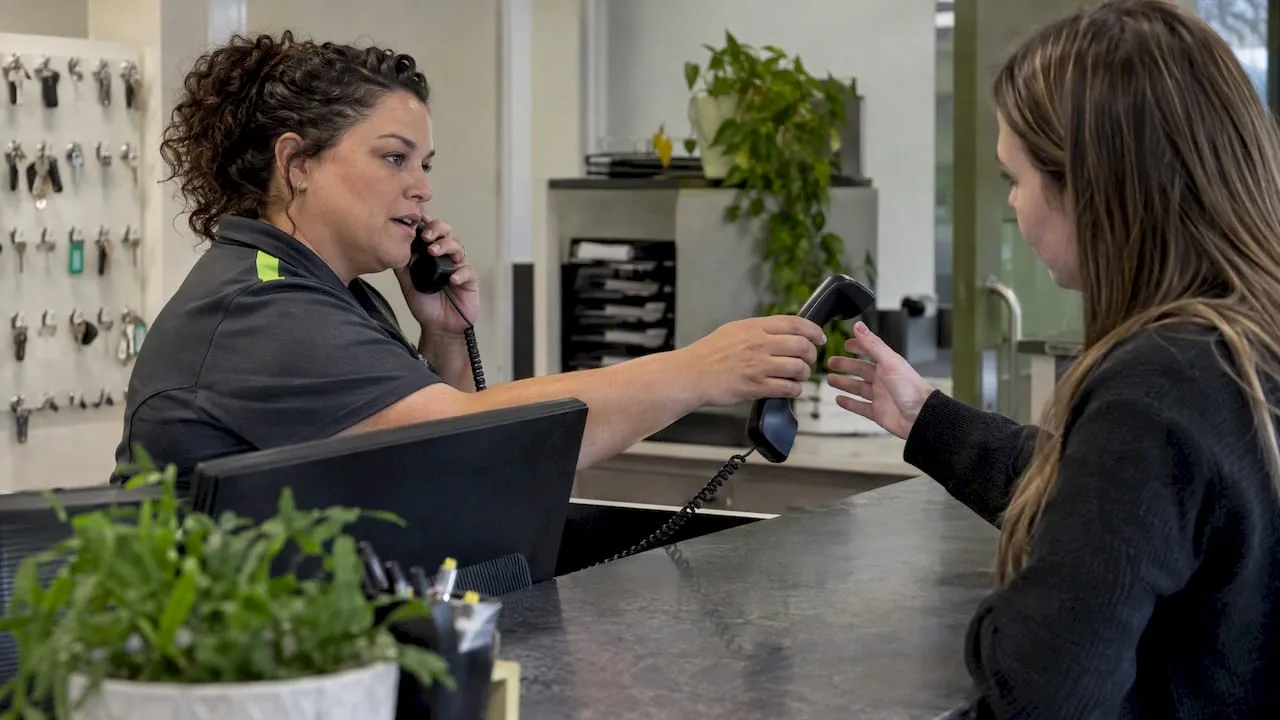
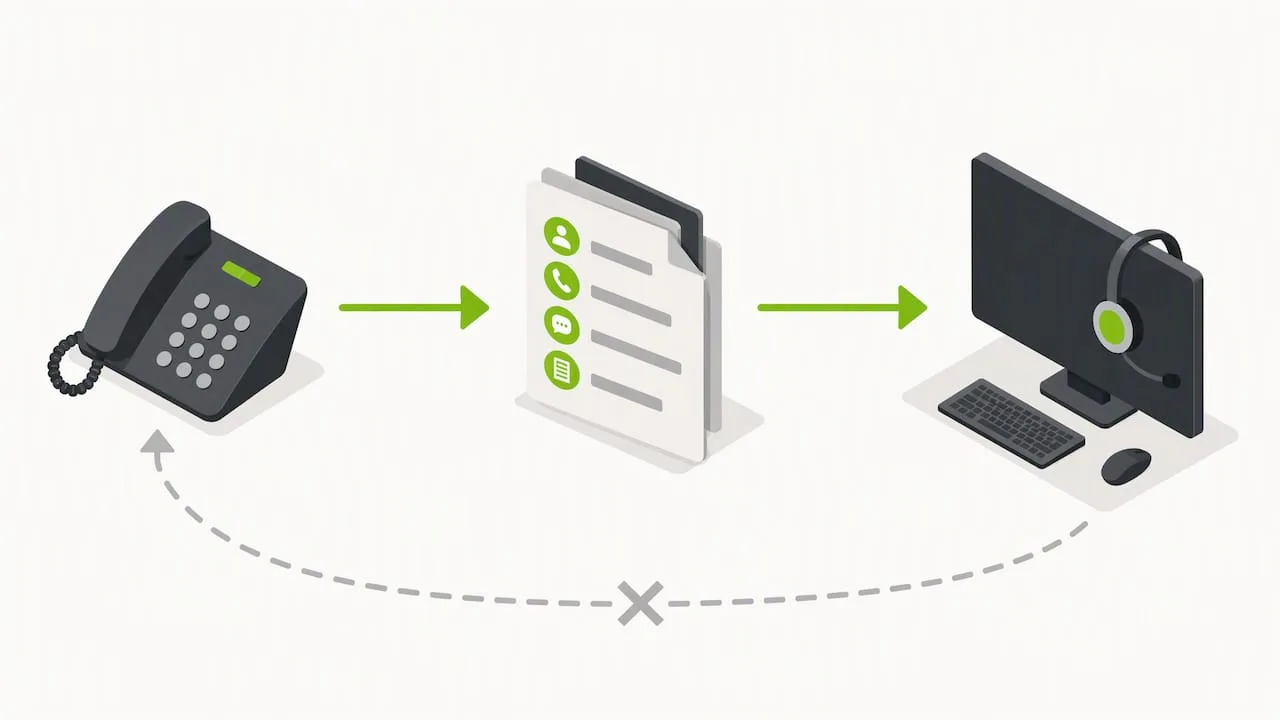
A warm transfer runs in three moves: you assess the caller's need, you brief the next agent privately, then you introduce both parties before stepping away. That middle step is what separates a warm transfer from simply forwarding a call and hoping for the best.
Three roles are in play during the handoff. You, as the initial agent, gather the essentials and make the connection. The receiving agent listens to your brief and prepares to take over. The caller waits on a short hold, then hears a familiar face (or voice) pick up where you left off.
- Assess: confirm the caller actually needs a different department or specialist.
- Brief: call or message the receiving agent with the caller's name, issue, and goal.
- Introduce: connect all three parties, state names, confirm readiness, then exit.
Some teams use a true three-way conference where you stay on briefly to make introductions. Others use a "warm forward," where you brief the next agent by chat or CRM note and then transfer the call without a live three-way moment. Both count as warm transfers as long as the receiving agent has context before they speak.
Warm Transfer vs. Cold Transfer: Which One Fits the Moment
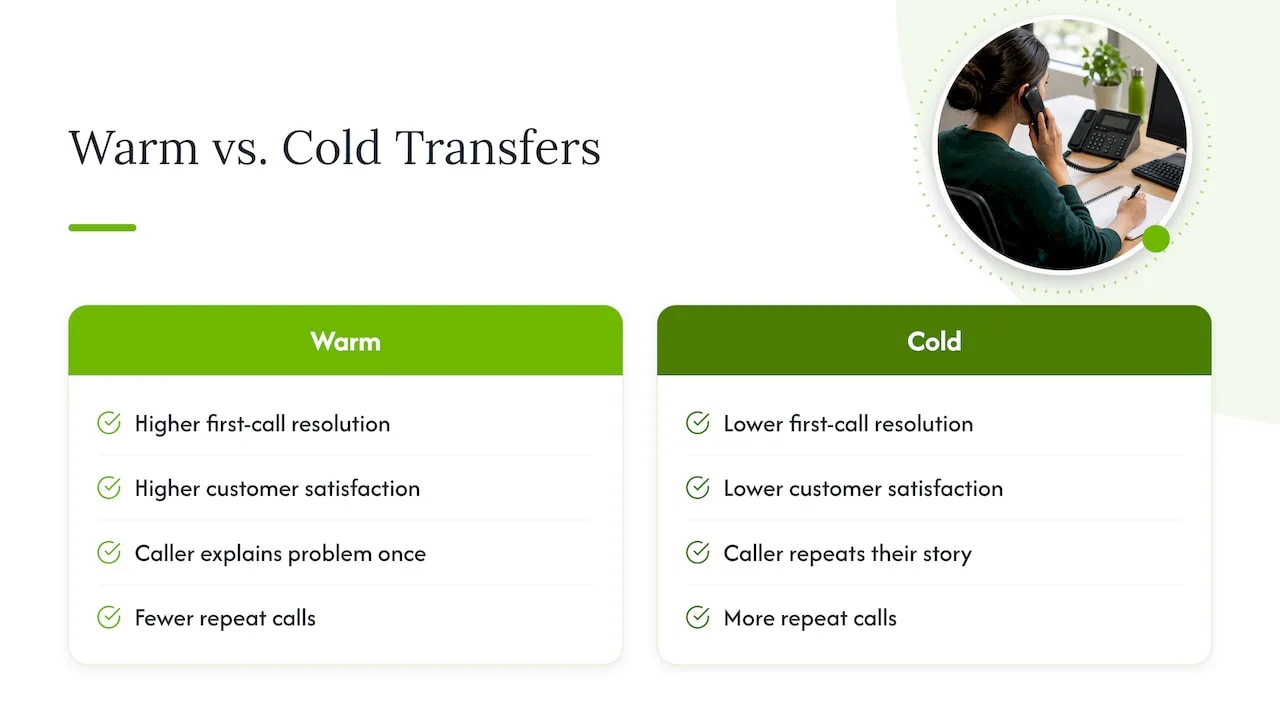
A cold transfer sends the caller to another line with zero context, so they start over and often repeat their account number, their issue, and their frustration level. A warm transfer protects that context, which is why it tends to feel smoother on both ends of the call. Our earlier comparison of warm and cold transfers breaks down more scenarios if you want a deeper look.
- Context sharing: warm transfers pass details forward; cold transfers pass none.
- Caller repetition: warm transfers minimize it; cold transfers almost guarantee it.
- Wait time: warm transfers add a short hold; cold transfers can land the caller in a queue with no warning.
Warm transfers work best for complex billing disputes, technical escalations, or any caller who sounds frustrated or anxious, because continuity lowers the emotional temperature of the call. A cold transfer, or even a scheduled callback, is acceptable for routine requests where the next team can pick up the thread from account notes alone, or when the receiving line is a general queue rather than a specific person. If a caller insists on speed over continuity and the issue is simple, a quick cold transfer with a heads-up ("I'm connecting you now, this line can help with that directly") is reasonable.
Why Warm Transfers Matter: Evidence and Business Impact
The case for warm transfers isn't just a courtesy. SQM's research shows warm transfers lead to significantly higher first-call resolution and customer satisfaction compared with cold transfers, and that minimizing wait time during the handoff improves outcomes further.
From the caller's side, the benefit is simple: they explain their problem once, not twice or three times. That continuity signals that the business is organized and listening, rather than shuffling them between strangers. Agents hear this firsthand when a caller sighs with relief after hearing "I've already told them what you need" instead of launching into their story again.
For the business, fewer repeat calls mean fewer redundant minutes on the phone system and fewer callers who hang up mid-transfer out of frustration. A caller who reaches the right person on the first attempt is also more likely to convert, whether that means booking an appointment, resolving a billing question, or staying on as a customer instead of calling a competitor. Warm transfers cost you a few extra seconds of briefing time, but they buy back entire calls that would otherwise happen twice.
Step-by-Step Warm Transfer Procedure for Agents
Keep this sequence close to your desk until it becomes second nature. It works whether you're on a desk phone, a softphone, or a cloud contact center platform.
- Confirm the transfer is necessary. Ask one clarifying question if needed, then collect the caller's name and account or reference number, nothing more.
- Tell the caller what's happening. Say you'll place them on a brief hold and why, so they're not caught off guard by silence.
- Brief the receiving agent. Call or message them with four things: the caller's name, the issue in one sentence, the account ID, and the outcome the caller wants.
- Do the three-way introduction. State both names out loud, confirm the receiving agent is ready, then hand over control and disconnect.
- Fall back when needed. If the receiving agent is unavailable, tell the caller you'll schedule a callback, or send a warm-forward note so the next agent has context even without a live three-way moment.
A focused briefing takes ten to fifteen seconds when you stick to the four fields above. Skipping straight to "I have someone on the line for you" without those fields is how callers end up repeating themselves anyway, which defeats the purpose of the warm transfer in the first place.
Pro Tip: Say the caller's name within the first sentence of your briefing. It keeps the receiving agent oriented and makes the caller feel like a person, not a ticket.
If you work somewhere that uses scripted or system-level handoffs, the same discipline applies even when a machine does part of the work. Public examples of transfer automation patterns show that scripted, checklist-driven handoffs reduce the chance of dropped context when data moves between systems, the same principle that makes a human warm transfer work.
Copy-Ready Warm Transfer Scripts for Common Scenarios
These scripts are short on purpose. Read them as a starting point and adjust the wording to match your company's tone.
Receptionist to billing specialist: Escalation to a manager: Sensitive account handoff: A short confidentiality phrase like that matters more than it might seem. The American Bar Association recommends careful handling of client information during transfers and routing, advising secure practices and minimal disclosure when handing off sensitive calls, a principle that applies well beyond legal offices whenever account or personal details are involved.
- Busy agent fallback: "The specialist is with another caller right now. I can schedule a callback within the hour, or take your details and have them call you back directly. Which works better?"
- Voicemail avoidance: always wait for a live answer before you complete the transfer. If the line rings through to voicemail, stay on with the caller and offer the callback option instead.
Technical and Timing Tips That Make Transfers Faster
A few small habits shave real time off every handoff without cutting corners.
- Use CRM screen-pops so the receiving agent sees the caller's history before you even finish the briefing.
- Keep your briefing to four fields: name, issue, account ID, and desired outcome.
- Aim for a hold time under sixty seconds. If the brief is taking longer, tell the caller you need a bit more time rather than leaving them wondering.
- Use a true conference or warm-transfer feature on your phone system instead of a blind forward, since blind forwards skip the introduction entirely.
- Confirm the receiving line picked up before you disconnect, every time.
Teams managing escalations across departments sometimes formalize this with a structured handoff checklist. One example worth looking at is this breakdown of a five-field handoff process built to stop service-level breaches during help desk escalations, a useful model even outside IT support.
Common Mistakes to Avoid and Quick Pro Tips
Most warm transfer failures come down to rushing the briefing or skipping it altogether.
- Don't forward without briefing. It forces the caller to repeat everything and erases the point of a warm transfer.
- Don't over-explain. A briefing longer than a few sentences slows the call down without adding value.
- Don't disconnect before confirming the receiving agent is ready. A caller left in silence mid-transfer is worse than a cold transfer.
Pro Tip: Say the caller's name twice during the handoff, once in your briefing and once in the introduction, confirm the receiving agent by name as well, and end your part of the call with a clear sentence like "You're all set, they'll take it from here."
How AI Receptionists Support Warm-Transfer Workflows
Automated routing doesn't replace the warm transfer, it removes friction from the briefing step. Our AI receptionist handles the initial call, captures caller details, and routes to the right person or team with context already attached.
- Smart routing sends calls to the right specialist based on the reason for the call, not a generic menu.
- 24/7 answering means calls get captured and context gets logged even outside business hours.
- CRM integration surfaces caller history automatically, cutting down on manual briefing.
- Automated context capture means the human agent picking up already has the name, issue, and account details in front of them.
Pairing a human warm transfer with that kind of automated screen-pop gets you the best of both: a real introduction, backed by data the receiving agent didn't have to ask for.
What This Means for Small Service Teams
Small teams rarely have the staffing to let a missed handoff slide. A repeatable script turns a skill that usually comes from months of experience into something a new hire can use correctly on their first week. The real balance is speed versus thoroughness: a ten-second briefing that hits four fields beats both a rushed handoff and an overlong one, and it's the difference between a caller who feels handled and one who feels passed around.
— Serhii
A Practical Way to Automate Your Warm Transfers
Scripts fix the wording. RingPort fixes the workload behind it. When calls are routed through a platform like this, every handoff can start with context already captured, so whoever picks up next isn't starting from zero.
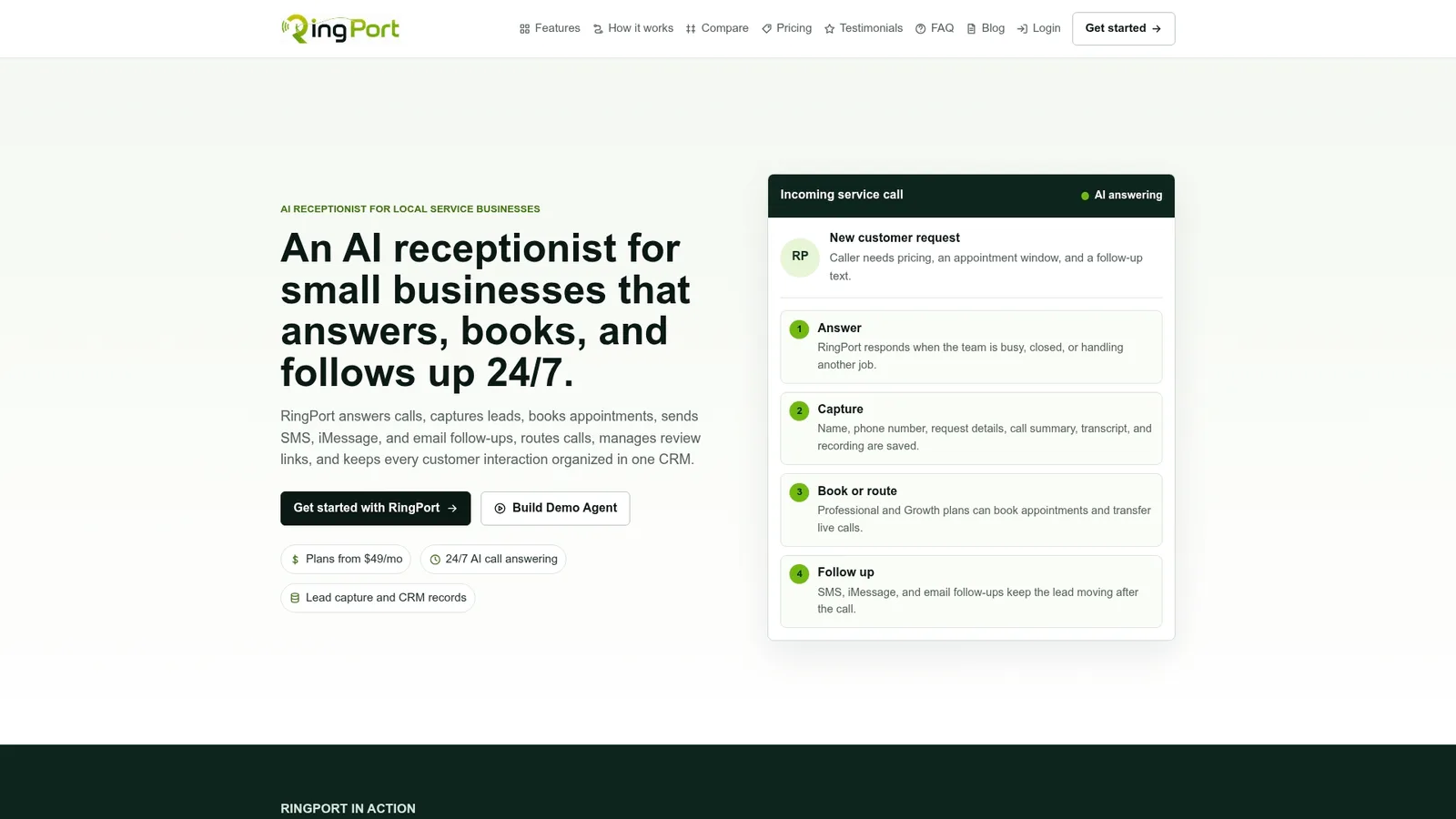
- 24/7 AI call answering catches calls your team can't, including after hours and during busy periods.
- Smart routing and CRM management means the right person gets the right context automatically.
- Flexible plans fit teams of different sizes, from Starter at $49 per month to Growth at $299 per month.
If your team is handling transfers manually and losing callers to voicemail or repeat questions, it's worth seeing what automated routing and CRM context can take off your plate. Check out RingPort's plans or see how RingPort Fast Agent handles rapid call routing for a closer look at fitting this into your own workflow.
FAQ
What is warm transferring a call?
A warm transfer is when the agent who first answers a call briefs the next agent on the caller's issue before connecting them, then introduces both parties live. It's the opposite of a cold transfer, where the caller is sent to a new line with no context at all.
Which is a rule for transferring calls?
A core rule is to never disconnect until you've confirmed the receiving agent has picked up and is ready to take over. Another is to keep the briefing short, covering the caller's name, issue, account ID, and desired outcome, so the handoff stays quick and accurate.
What to say before transferring a call?
Tell the caller you're placing them on a brief hold and explain why, for example: "I'm going to connect you with our billing specialist who can help with this directly, one moment please." That short heads-up keeps the caller from feeling abandoned mid-call.
How do I warm transfer a call in 8x8 Work?
The general warm transfer flow, confirm the need, brief the next agent, then introduce and disconnect, applies across most cloud phone systems, including popular ones. Specific button sequences vary by platform version, so checking your system's own transfer settings or help documentation is the most reliable way to confirm the exact steps.
Sources
- Call Transfer & Hold Performance Impact on Csat and FCR
- Protecting client confidentiality in the legal field today: tips and tools for cybersecurity
- move-customers script (example of transfer automation patterns)