Small Businesses: 3 Low Cost Moves to Stop Missing Calls
Stop losing phone leads with three low cost fixes: enable forwarding, SMS auto reply, and add an AI receptionist. Start booking calls within a week.

How many customers are slipping away before you can answer?
Answer 4 quick questions and get a simple missed-call estimate for your business.
Answer with one tap. Contact details come after your result.
Here is the estimate.
Thanks. Your result was received.
The fastest way to reduce missed calls is to combine three moves: turn on call forwarding or simultaneous ring, set up an immediate SMS auto-reply for anyone who slips through, and add a 24/7 automated answering option like RingPort for after-hours and overflow calls. Together, these steps cut down on missed leads and get customers booked faster, often within the same week you set them up.
TL;DR:
- Turning on call forwarding or simultaneous ring ensures no call goes unanswered, especially when combined with a quick response to missed leads within 15 to 30 minutes.
- Implementing an SMS auto-reply asking for caller details and preferred contact times increases the chances of converting missed calls into booked appointments.
- Using short IVR menus and routing calls by role helps prevent callers from hanging up due to confusing options, especially when staffing is limited.
- Automating after-hours and overflow calls with AI receptionists like RingPort can capture leads outside normal hours and sync data directly into CRM systems.
- Tracking call metrics such as answered rate, missed calls, and conversion helps measure the ROI of missed-call fixes before expanding automation efforts.
Table of Contents
- Quick wins you can implement today
- Phone system and routing fixes: forwarding, IVR, and smart routing
- Staffing, scheduling, and processes that reduce missed calls
- How AI receptionists like RingPort help capture missed leads
- Measuring the cost and ROI of missed-call fixes
- Three priorities to start with this month
- How RingPort helps you stop losing calls
- Sources
- FAQ
Quick wins you can implement today
You do not need new software to stop losing calls this week. Most phone systems already include the tools, they just need to be turned on and configured correctly.
Start here:
- Set up call forwarding or simultaneous ring so an unanswered call at your desk rings your cell phone at the same time, not after a delay.
- Turn on an SMS auto-reply for missed calls that asks for the caller's name, reason for calling, and best time to reach them back.
- Publish consistent hours on your voicemail greeting, website, and Google Business Profile so callers know exactly when you're open.
- Enable voicemail-to-text so messages land in your inbox as readable text instead of audio you have to sit through.
- Turn on carrier call labeling and spam filtering so legitimate customers are less likely to get flagged, and known spam numbers stop ringing through.
Once forwarding and text-back are live, set an internal rule to call every missed lead back within 15 to 30 minutes. Response speed matters more than most business owners assume: a caller who hears back quickly is far more likely to book than one who waits until tomorrow.
Pro Tip: Test your own phone number from a friend's cell during business hours. If it takes more than two rings to reach a person or a clear voicemail option, your setup needs adjusting.
Phone system and routing fixes: forwarding, IVR, and smart routing
Once the basics are running, the next layer is choosing the right routing method for your team size and call volume. Simultaneous ring works well for solo owners and two-person teams: every call hits every device at once, and whoever picks up first takes it. A hunt group, which rings a list of numbers in sequence, fits slightly larger teams where you want a backup order rather than everyone's phone buzzing simultaneously.
If you use an interactive voice response (IVR) menu, keep it short. A caller who hears more than three options before reaching a person is more likely to hang up. Route by role ("press 1 for scheduling") rather than by department jargon customers won't recognize.
A few things worth checking with your phone or VoIP carrier:
- Confirm voicemail reliably delivers messages and transcriptions without delay.
- Ask whether your plan has a call queue cap that could silently drop calls during busy periods.
- Verify your carrier supports STIR/SHAKEN caller ID authentication, which the FCC recommends as a core defense against spoofed robocalls that make customers hesitant to answer unknown numbers.
If your routing rules already match your team's availability and calls are still slipping through, the problem usually isn't your plan, it's staffing — especially for professional services needing specialized IT support to keep phone lines reliable. Upgrade the phone system only after you've confirmed the rules themselves are sound.
Staffing, scheduling, and processes that reduce missed calls
Technology only closes part of the gap. The rest comes down to who owns the phone and when.
- Build a simple on-call rotation so one person is always responsible for incoming calls, even outside normal hours.
- Set a speed-to-lead SLA, such as returning every missed call within 30 minutes, and assign one person to own follow-up.
- Write a short call script covering greeting, common questions, and how to take a message, so anyone on the team sounds consistent.
- Define fallback rules, like forwarding to a second number after four rings, so no call rings out unanswered.
- Track missed-call follow-up in a shared spreadsheet or CRM field so nothing falls through after the callback.
None of this requires a full-time hire. It requires clear ownership and a rule everyone follows the same way, every time.
How AI receptionists like RingPort help capture missed leads
For after-hours calls, peak-time overflow, or teams too small to staff a dedicated line, automated answering fills the gap that forwarding and SLAs can't cover alone. An AI receptionist answers every call, books appointments directly into a calendar, and follows up by text if the caller needs more information before committing.
RingPort, built specifically for local service businesses, works this way: it answers calls around the clock, captures caller details, routes urgent calls to the right person, and syncs everything into a CRM so nothing gets lost in a notebook or a missed voicemail.
Practical capabilities worth knowing about:
- Automated call answering and appointment booking, so calls convert into scheduled jobs without anyone picking up the phone.
- SMS and email follow-up, so leads who don't book immediately still hear back.
- CRM sync, so call history and customer details live in one place instead of scattered notes.
Businesses that roll this out typically start small: automate only after-hours and overflow calls first, then expand once the workflow feels reliable. For step-by-step setups, RingPort's guides on missed call text back and smart call routing walk through configuration in plain terms.
Pro Tip: Pilot automation on your slowest coverage window first, usually evenings or weekends, before expanding it to daytime overflow.
Measuring the cost and ROI of missed-call fixes
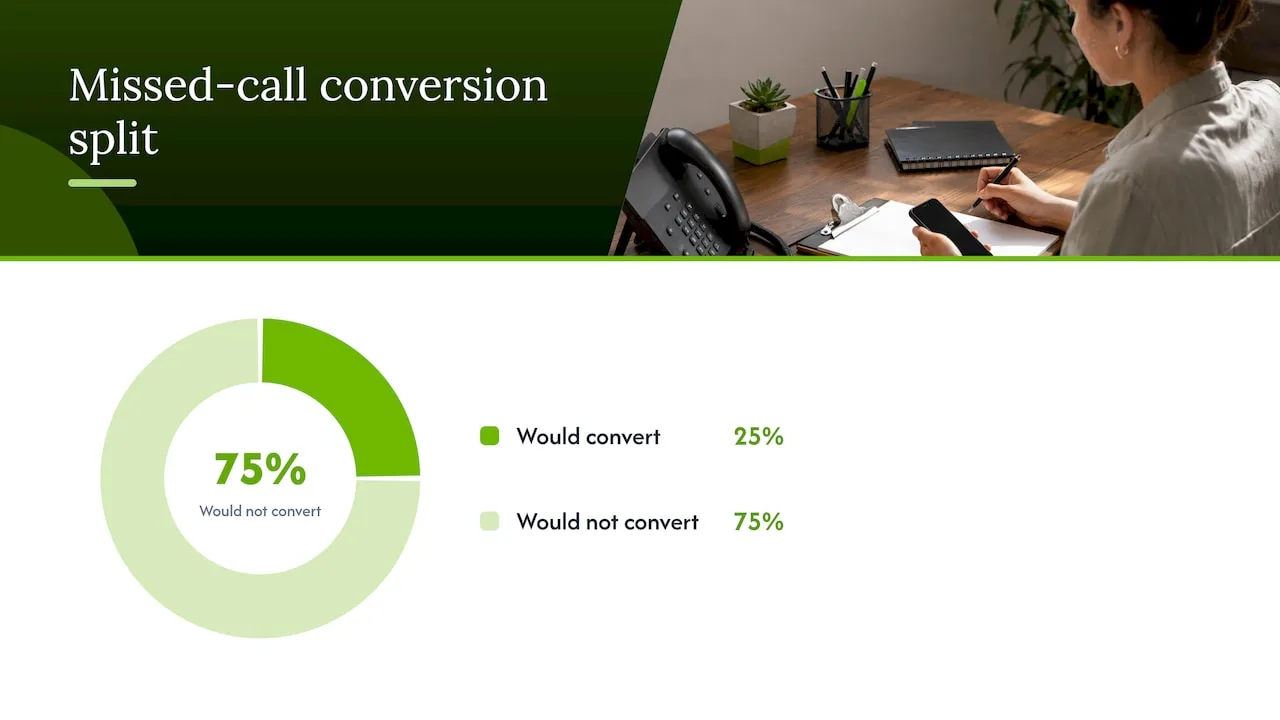
You can't fix what you don't track. Before adding new tools, watch four numbers: answered call rate, total missed calls per week, call-to-booking conversion, and average revenue per booking.
Here's a simple way to think about it: if your business averages one missed call per day and one in four missed calls would have converted into a booking worth $150, that's roughly $1,050 in monthly revenue sitting in unanswered calls, a number worth validating against your own averages before assuming it applies.
- Track calls for two to four weeks before and after a change to see if the fix actually moved the numbers.
- Use a dedicated tracking number or call tag so you can attribute bookings back to specific marketing sources.
- Log missed-call follow-up outcomes in your CRM to see how many turn into paying customers.
A related figure worth knowing: the National Do Not Call Registry had 259 million registered numbers as of September 30, 2025, a reminder that most consumer lines are actively screening unknown calls, which makes fast, clear callbacks even more valuable.
Three priorities to start with this month
If you only do three things, do these: turn on call forwarding and an SMS auto-responder this week, set an internal SLA for missed-call callbacks and actually test it with a real call, and pilot an AI receptionist on your off-hours before rolling it out further. Small, sequenced changes beat a complete overhaul nobody sticks with.
— Serhii
How RingPort helps you stop losing calls
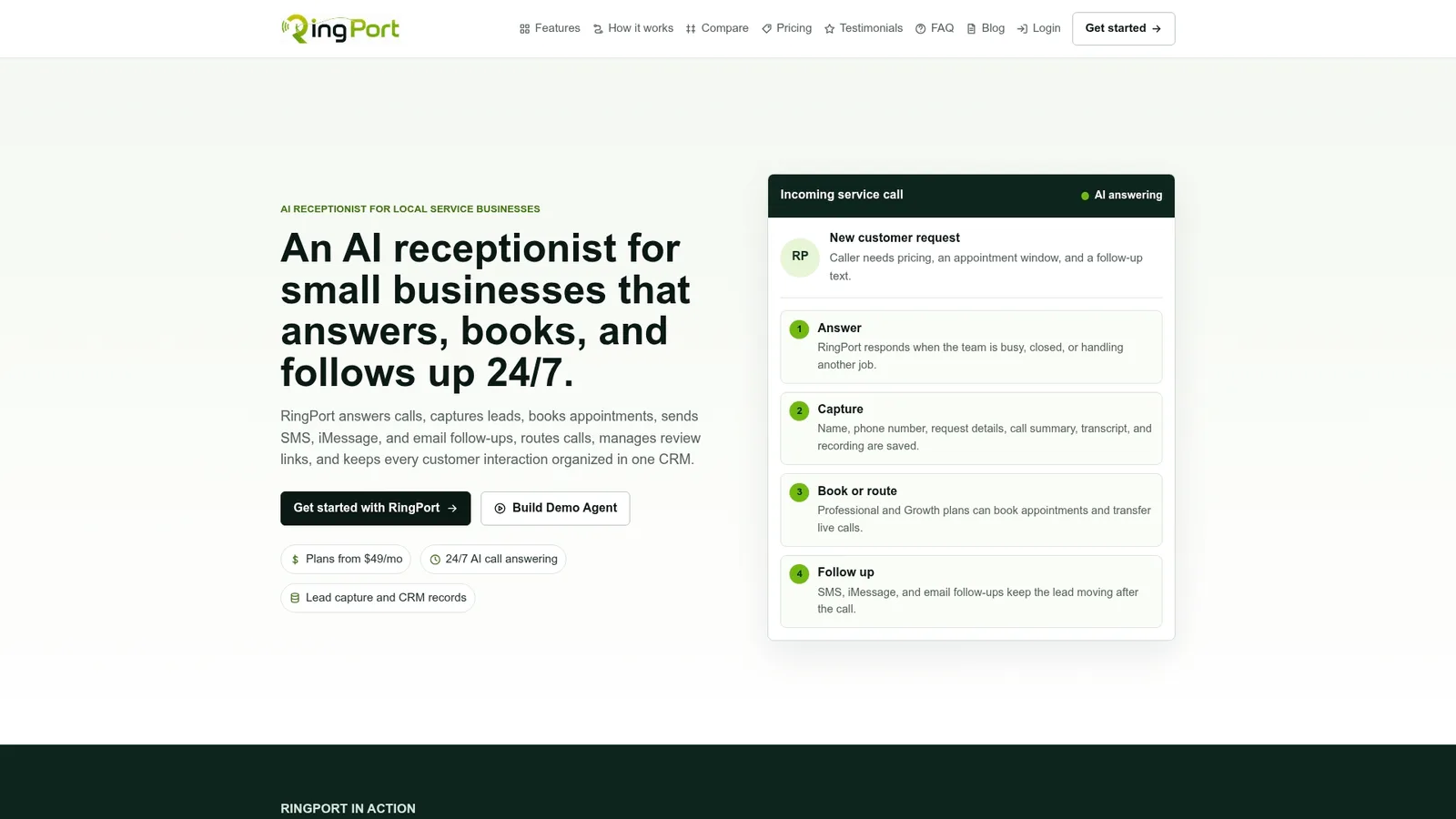
If you run a local service business and most of your bookings start with a phone call, an AI receptionist can provide 24/7 coverage without adding payroll. It answers every call, books appointments directly, and follows up by text when a caller needs a nudge, syncing everything into one CRM so you're not juggling notebooks and missed voicemails.
Getting started is simple:
- Start with an entry-level plan if you're testing automation for the first time.
- Upgrade as call volume and features you need grow.
- Try a faster-answering option if you want it layered onto your existing setup.
You can run RingPort alongside your current process, covering only after-hours or overflow calls at first. Visit Ringport to see plan details and get set up.
Sources
- National Do Not Call Registry FAQs | Consumer Advice
- Combating Spoofed Robocalls with Caller ID Authentication | Federal Communications Commission
FAQ
Does *67 still work when calling a business?
Dialing to hide your caller ID masks the number from the person receiving the call, but it doesn't stop the call from connecting, so most business phone systems will still ring through. Some businesses use call-blocking settings that automatically reject unidentified numbers, so a call with hidden ID may be more likely to go to voicemail or get screened.
Why am I getting so many spam calls on my business phone?
Business lines are common targets for robocalls because numbers are often publicly listed for customer contact. Enabling your carrier's spam labeling and caller ID authentication features, which the FCC recommends as a defense against spoofed calls, can reduce how many reach you.
What are the 7 P's of business phone etiquette?
Definitions of the "7 P's" vary by source, but a common version includes: prompt, polite, prepared, personable, professional, patient, and precise. The consistent thread across most versions is answering quickly, staying courteous, and giving the caller clear, accurate information.
How do I handle business calls professionally?
Answer within two to three rings, greet the caller with your business name, and confirm their reason for calling before jumping into a solution. Keep a simple script handy for common questions so every team member sounds consistent, and always confirm next steps before ending the call.
How quickly should I call back a missed customer call?
Most small businesses benefit from returning missed calls within 15 to 30 minutes, since interest and urgency tend to fade quickly after someone hangs up without an answer. Pairing that callback window with an immediate SMS auto-reply keeps the customer engaged while you're getting back to them.