Small Service Pros: Missed Call Recovery with TCPA Safe SMS Scripts
Actionable guide for small service businesses to recover missed calls: TCPA safe SMS scripts, buyer test scenarios, CRM booking, plus a RingPort setup option.
How many customers are slipping away before you can answer?
Answer 4 quick questions and get a simple missed-call estimate for your business.
Answer with one tap. Contact details come after your result.
Here is the estimate.
Thanks. Your result was received.
The fastest way to recover missed calls is an automated text-back and qualification workflow: the moment a call goes unanswered, it sends a branded text, asks a quick qualifying question, offers booking or a callback, and logs the result in your CRM. Businesses that put this in place typically recover a meaningful share of callers who would otherwise hang up and call a competitor. The catch is doing it inside legal guardrails and testing it like any other piece of your operation. There are ready-made options available if you would rather not build this yourself.
TL;DR:
- Automated text-back workflows can recover a significant share of missed calls by engaging callers promptly and routing them to booking or callbacks.
- Voicemail interrupt the recovery chain, offering no structured record of caller intent or urgency, unlike automated text responses.
- Critical workflow components include trigger definition, response timing within two minutes, clear qualification questions, and CRM integration.
- Testing should simulate real scenarios, including after-hours calls and urgent requests, to ensure the system functions reliably before deployment.
- Legal compliance requires obtaining specific, documented consent for automated texts and adhering to FCC and DNC rules to avoid violations.
Table of Contents
- What missed call recovery actually means and why voicemail falls short
- Core workflow components every small team must check
- How to test a missed call recovery setup before you trust it
- Setting up missed call recovery: steps and ready-to-use scripts
- Compliance essentials: TCPA, DNC, and FCC rules for automated texts
- Author perspective: practical tradeoffs and common traps
- RingPort: a ready option for missed call recovery
- FAQ
- Sources
What missed call recovery actually means and why voicemail falls short
Missed call recovery is not a single clever text message. It is a workflow: a chain of small decisions that turns a dropped ring into either a booked job or a tracked lead in your CRM. Each link in that chain matters, and skipping one usually means the caller disappears before you ever learn why they called.
The path looks like this: your phone system detects the missed call, an automated text goes out within moments, the text asks a qualifying question (what service, how urgent, where), the caller's answer routes them to booking or a human callback, and the whole exchange gets written to your CRM so nothing depends on memory.
Voicemail breaks this chain at step one. A caller who hits voicemail has to decide whether leaving a message is worth their time, and most decide it is not. Even when they do leave one, there is no structured record of what they needed or when, just an audio file someone has to listen to and interpret.
- Voicemail asks the caller to do the work; text-back does the work for them.
- A missed call with no response leaves zero record of intent, urgency, or contact preference.
- Inconsistent callbacks (an hour later, a day later) lose the moment when the caller actually needed help.
Core workflow components every small team must check
A missed-call workflow only converts leads if every piece underneath it is set correctly, including how chatbots can follow up leads automatically. These are the parts worth checking before you trust the system with real callers.
- Trigger definition. Decide exactly which events fire the workflow: unanswered rings, calls sent to voicemail, or both, and whether after-hours calls trigger a different message.
- Response timing. The first text should go out within a minute or two of the missed call; replies from the caller deserve a clear internal SLA too, not just the automated side.
- First-message content. Identify your business by name right away so the text does not read as spam, and keep the first message short.
- Qualification branches. Ask one clear question at a time: what service, how urgent, and roughly where, so routing decisions have something to work with.
- Booking and CRM integration. Whatever the caller chooses, booking link or callback request, the outcome needs to land in your CRM automatically, not in a notebook by the phone.
- Escalation and ownership. Someone specific needs to own replies that the automation cannot resolve, especially urgent requests, or they sit unanswered in a text thread nobody is watching.
Pro Tip: Assign one named person, not "the team," as the default owner for escalated replies. Shared ownership is how urgent texts sit unread.
How to test a missed call recovery setup before you trust it
Before you commit to any vendor or workflow, run it through the same situations your real callers create. A system that looks fine in a demo can still fail at 9 p.m. on a Saturday.
- Phone number handling: confirm the workflow works whether you forward your existing number or use a new one, and that caller ID still looks right.
- Two-way reply logic: text back after the automated message and check that it understands a simple answer, not just the first qualifying question.
- CRM sync: verify that a test lead actually appears in your CRM with the right details, not just in the texting app's own inbox.
- Booking flow: walk through booking an appointment end to end, including what happens if you pick an unavailable slot.
- Reporting: check that you can see reply rate, appointments booked, and time to human follow-up without digging through logs by hand.
Run four scenarios specifically: a routine service request, an after-hours call, a caller who says it is urgent, and a returning customer who has called before. If any of those breaks the chain, you will find out in testing instead of in front of a real customer, which is the entire point of mapping real intake before automating.
Setting up missed call recovery: steps and ready-to-use scripts
Getting a basic recovery workflow running does not take long once you know the order of operations.
- Connect or forward your business number into whatever system will send the automated text.
- Set trigger rules for which missed calls fire a text: all of them, after-hours only, or both with different messages.
- Write a branded first text that names your business and invites a reply.
- Map two or three qualification branches for service type, urgency, and location.
- Connect your CRM and booking link so every reply writes a record and offers a next step.
A full missed call text-back setup guide walks through the technical side in more detail.
Three starter templates cover most situations:
- "Hi, this is [Business Name], sorry we missed your call. What can we help with today?"
- "Thanks for calling [Business Name]. Reply with your zip code and we'll confirm if we service your area."
- "We're closed right now but got your call. Reply URGENT if this can't wait until morning, otherwise we'll text you first thing."
For a live callback, a short script works better than winging it: "Hi, this is [Name] from [Business]. I saw we missed your call. What's going on, and when would you like us out there?"
Route anything marked urgent straight to a person, not another automated step.
Compliance essentials: TCPA, DNC, and FCC rules for automated texts
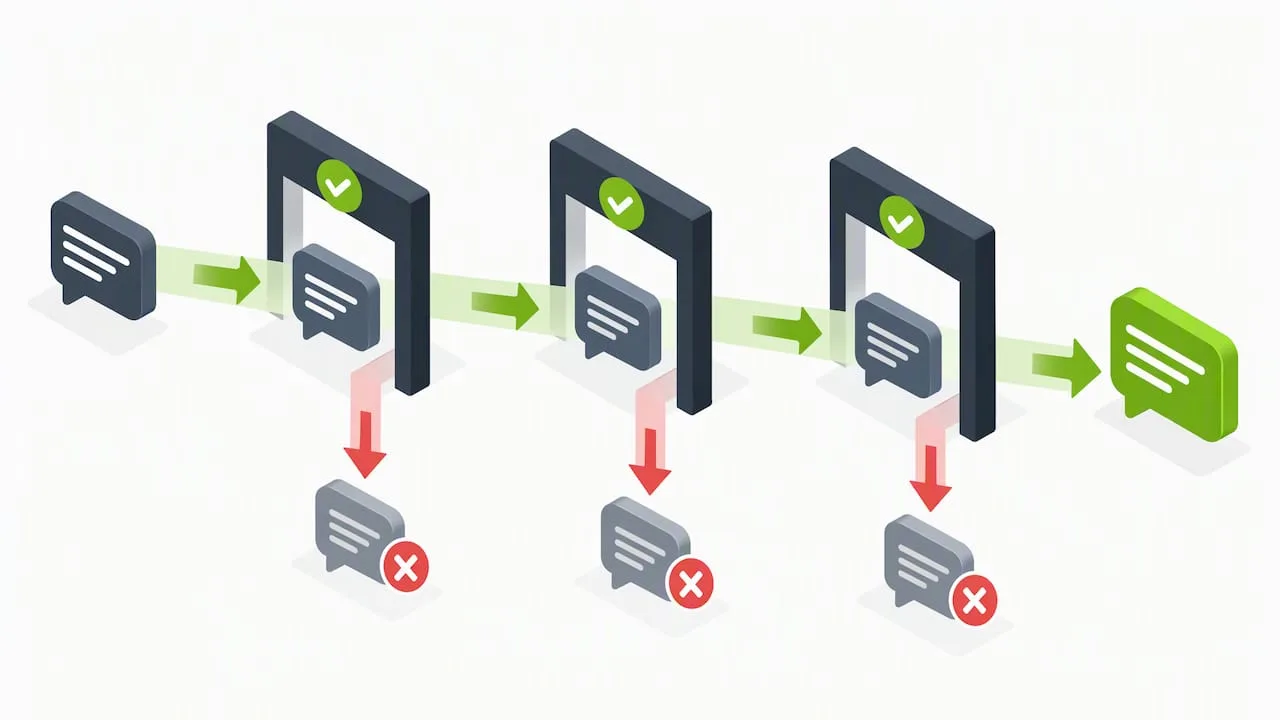
Automated texting is legal, but the FCC has tightened the rules in ways that matter for small businesses. The FCC's 2024 ruling on prior express written consent requires that consent be one-to-one and tied specifically to the seller sending the text, with clear recordkeeping behind it. You cannot rely on a general opt-in collected somewhere else.
Separately, the Second Report and Order on text blocking requires providers to block identified illegal text sources and extends National Do Not Call protections to texts, not just calls.
A one-time confirmation text that simply acknowledges a missed call, without marketing content, is treated differently from an ongoing promotional text stream under current FCC guidance.
A legal summary from Nelson Mullins puts it plainly: consent has to be clear, specific to the sender, and documented. In practice, that means defaulting to a single confirmation text when consent status is unknown, treating any "STOP" reply as immediate revocation across calls and texts, and keeping records of what was sent and when.
Author perspective: practical tradeoffs and common traps
The biggest mistake we see is businesses automating before mapping their own intake process, which creates dead ends instead of conversations. Speed matters, but a reply that cannot answer the caller's real question is worse than a short, honest delay. Automate the routine parts and keep a visible human handoff for anything urgent or unusual. A managed workflow earns its keep once call volume outpaces what one person can text back consistently.
— Serhii
RingPort: a ready option for missed call recovery
We built RingPort around exactly this problem: calls that go unanswered because no one is free to pick up. Our platform answers around the clock, sends the text-back and qualification sequence described above, and writes every outcome straight into your CRM.
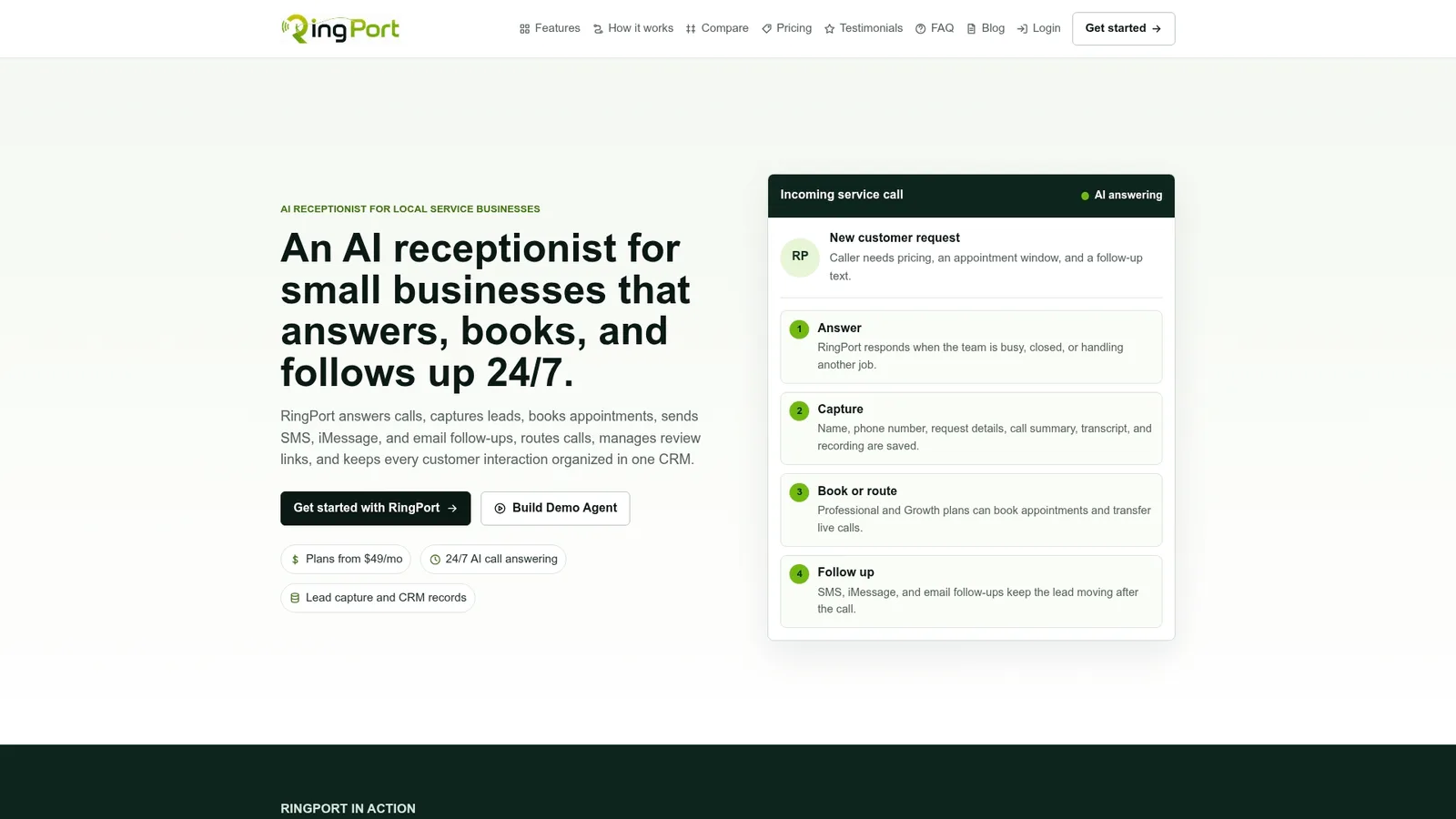
- 24/7 automated call answering so no call reaches voicemail unattended.
- Text-back workflows with qualification branches built for service, urgency, and location.
- CRM sync and booking integration so a recovered caller becomes a scheduled job, not a loose thread.
- Smart routing that hands urgent or complex calls to a real person automatically.
Plans start with the Starter plan at a low monthly rate, with Professional and Growth tiers available for increasing levels of service, all listed on our pricing page. If you want to see how fast setup can go, our Fast Agent page walks through a quicker onboarding path built for teams that want to start recovering calls this week.
FAQ
How to clear missed calls?
Enabling missed-call and voicemail notifications through your carrier or app, such as the steps in Google Voice's support documentation, helps you see missed calls as they happen. That alone does not recover the lead; pairing it with an automated text-back workflow is what actually re-engages the caller.
Do you call back missed calls?
A callback works, but a slow one often loses the moment the caller needed help. Many service businesses pair callbacks with an immediate automated text so the caller hears from you right away, then follows up with a real callback if the issue needs more detail.
How do I get missed call messages?
Most carriers and VoIP apps offer missed-call alerts through notification settings, similar to the Google Voice setup. For messages that actually qualify the caller and move them toward booking, you need a dedicated text-back workflow layered on top of basic alerts.
What to say when calling back from a missed call?
Identify yourself and your business immediately, then ask what the caller needs and when they would like service. A short, specific script works better than a generic greeting because it gets to the useful part of the conversation faster.
Sources
- FCC 24-24: Prior express written consent and related rules
- The FCC's prior-express written consent rule is changing — Nelson Mullins
- Turn Voice notifications on or off - Android - Google Voice Help