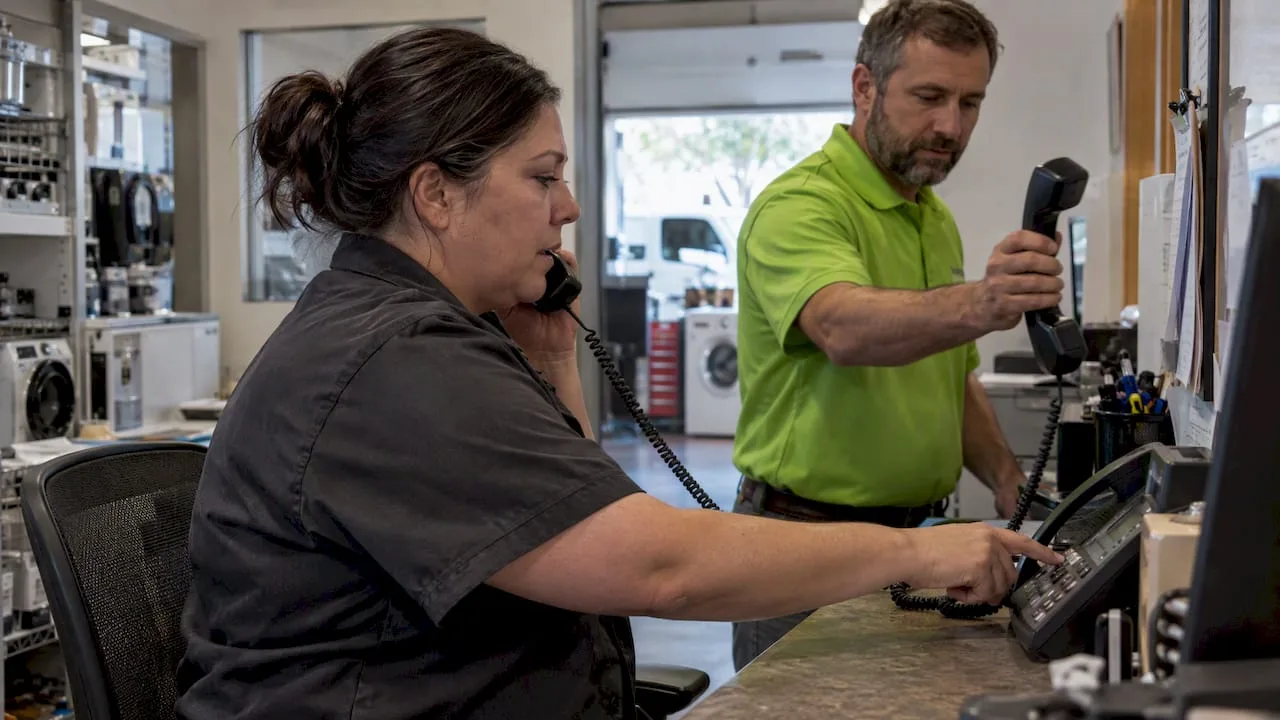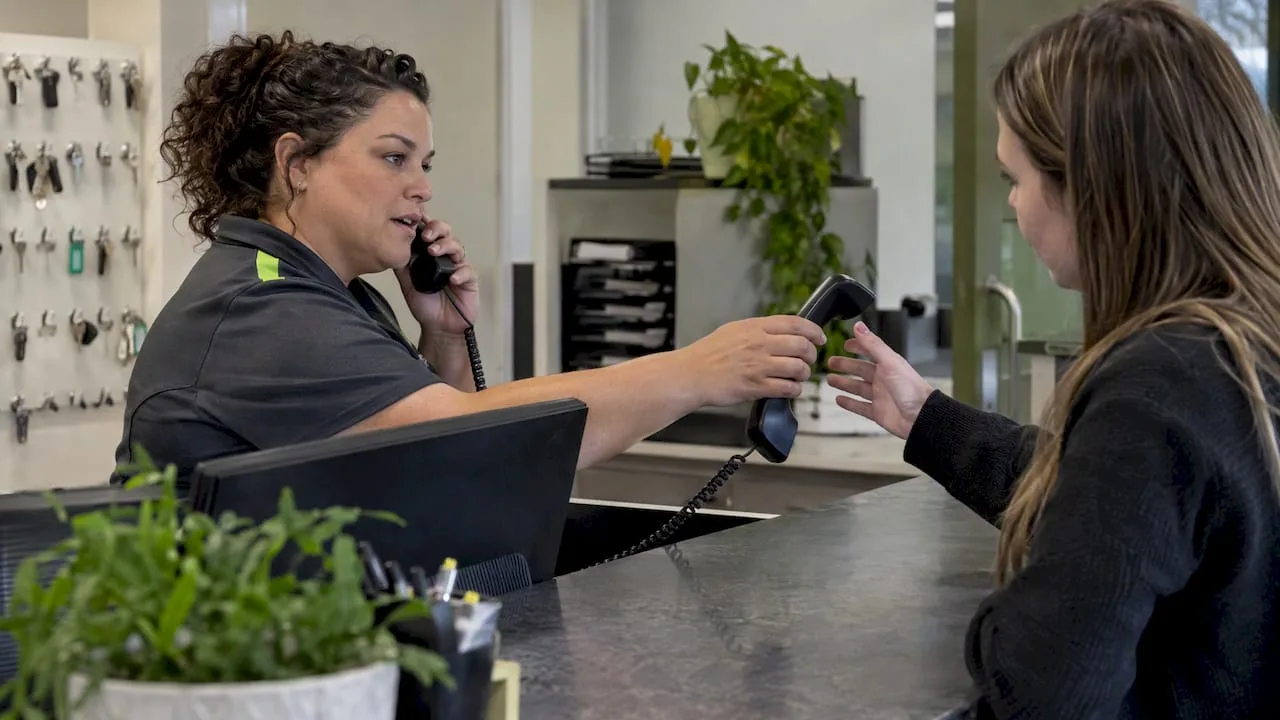
Stop Missed Calls in 30 Days: AHRQ+HIPAA Medical Office Call Handling
AHRQ and HIPAA aligned checklist to stop missed calls in 30 days. Includes scripts, staffing metrics, and a safe 24/7 AI receptionist pilot.

How many customers are slipping away before you can answer?
Answer 4 quick questions and get a simple missed-call estimate for your business.
Answer with one tap. Contact details come after your result.
Here is the estimate.
Thanks. Your result was received.
Answer every call quickly, check back promptly with anyone on hold, keep your phone menu with only a few options and always provide a direct path to a human, and require a signed Business Associate Agreement from any third-party phone or AI vendor. Once those basics hold, measure your call volume and consider a 24/7 automated option like RingPort to catch what your front desk can't.
TL;DR:
- Call answering protocols should include prompt responses, immediate follow-up, and clear scripts for appointments, refills, triage, and billing to ensure efficiency.
- Staffing must align with call volume peaks, assign front desk staff to scheduling and billing, and clinical staff to urgent issues, with escalation rules for critical symptoms.
- Phone systems require strict compliance measures, including signed Business Associate Agreements and seamless integration with scheduling or EHR platforms before handling patient data.
- Using mystery-shop audits quarterly helps identify workflow friction, long hold times, and confusing menus, enabling continuous improvement.
- Implementing a 24/7 AI receptionist like RingPort can reduce missed calls and improve after-hours booking, provided proper testing, integration, and compliance are verified first.
Table of Contents
- Build Phone Policies and Scripts Your Staff Can Actually Follow
- Who Answers What: Staffing and Workflow That Cuts Handoffs
- Choosing the Right Phone System Without Breaking Compliance
- Turning Call Data Into Staffing Decisions
- How a 24/7 AI Receptionist Like RingPort Fits This Playbook
- A 30-Day Checklist and the Mistakes That Keep Repeating
- Try RingPort for Missed Calls and After-Hours Booking
- FAQ
- Sources
Build Phone Policies and Scripts Your Staff Can Actually Follow
A written phone policy removes guesswork from the busiest hours of the day. AHRQ's health literacy guidance recommends answering calls promptly and checking back with a caller on hold after a short period, key standards worth posting at every workstation.
Start with a short answering standard your whole team commits to, then build scripts for the calls that happen every day:
- Appointment scheduling: greet, confirm patient identity, offer the next two available slots, confirm by repeating date and time back.
- Medication refills: verify prescriber and pharmacy, confirm last fill date, set an expectation for callback time.
- Nurse triage: ask the presenting concern, flag anything matching your practice's urgent criteria, route accordingly.
- Billing questions: confirm account identity, route to billing staff or offer a callback window if the line is clinical.
Your interactive voice response (IVR) menu deserves the same discipline. AHRQ's guidance calls for menus with only a few choices, plain language instead of clinical jargon, and an option to reach a person at every step, which is especially important for callers who are older, anxious, or unfamiliar with your system.
Document every call outcome in your scheduling or EHR system so the next staff member who picks up the chart sees exactly what was promised.
- Write the script.
- Post it at the phone station.
- Log the outcome before hanging up.
Pro Tip: Keep scripts to one page per call type. A script nobody reads is worse than no script at all.
Who Answers What: Staffing and Workflow That Cuts Handoffs
Clear role lines prevent the two most common phone failures: a clinical question stuck at the front desk, and a scheduling question bouncing between three people. Front-desk staff should own scheduling, intake, and billing; clinical staff should own triage, refill approval, and anything involving symptoms. Write the escalation rule down: any call mentioning chest pain, difficulty breathing, or similar red flags goes straight to a nurse, no exceptions.
Training should cover more than etiquette:
- Teach-back: ask the patient to repeat instructions in their own words before ending the call.
- Document every instruction given, not just the outcome.
- Confirm interpreter availability for non-English speakers before the call starts, not mid-conversation.
- Reconfirm patient identity before discussing any health information, every time.
Staffing patterns should mirror when your phones actually ring. Overlap your busiest hour with an extra staff member rather than spreading everyone evenly across the day, and build a lunch-coverage rotation so the phones never go unanswered for a full hour.
A mystery-shop audit, a standardized call placed by someone pretending to be a patient, is one of the lowest-cost ways to catch friction before patients complain about it. A PMC review of mystery-shop methodology found it effective for surfacing problems like long hold times and confusing menus, run quarterly and paired with real patient feedback.
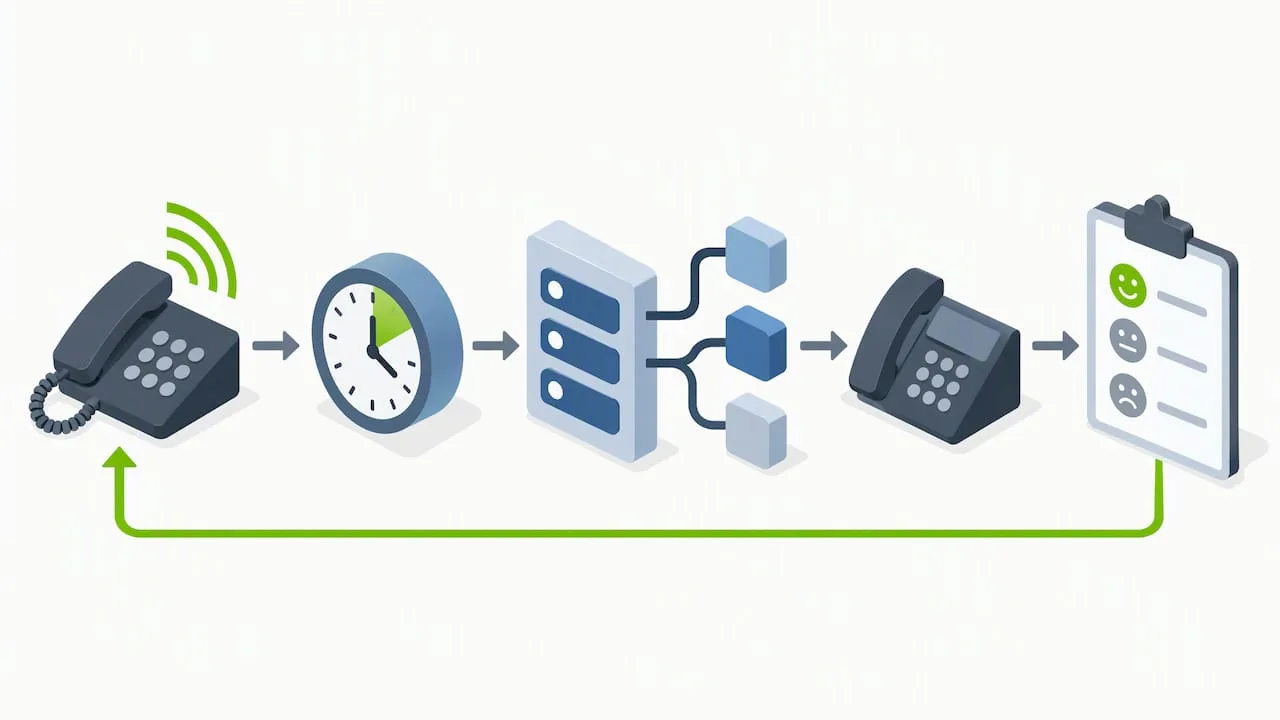
Pro Tip: Rotate who makes the mystery-shop calls each quarter. Staff recognize a familiar voice fast.
Choosing the Right Phone System Without Breaking Compliance
The system you choose shapes staffing cost, patient experience, and how exposed you are to missed calls. A basic in-house line keeps cost low but caps availability to office hours. A VoIP system with routing rules adds flexibility and typically integrates with scheduling software. An outsourced answering service adds after-hours coverage but at the cost of less clinical context. A 24/7 AI receptionist adds round-the-clock availability with lower staffing overhead, provided it integrates cleanly with your scheduling system.
Whichever you pick, your IVR menu should follow the same rules regardless of the underlying technology: five options or fewer, plain language, a path to a person at every branch, and language options where your patient population needs them.
HHS guidance on cloud computing states that any cloud or third-party provider handling electronic protected health information is considered a business associate under HIPAA and must sign a Business Associate Agreement. That single requirement should be the first question in any vendor conversation, not the last.
Before signing with any vendor, confirm: for proper governance and risk management, consider expert guidance on agentic AI strategy and governance.
- A signed BAA is in place before any patient data touches the system.
- The system integrates with your scheduling or EHR platform, not a standalone spreadsheet.
- Secure messages hand off cleanly between the phone system and clinical staff.
- Failover to a human is tested, not assumed, including a dry run during business hours.
If you're weighing texting as a follow-up channel alongside calls, the compliance questions are nearly identical to phone systems, worth reviewing before you commit to HIPAA-compliant texting as part of your communication stack. And if call routing itself is the bottleneck, smart routing rules can cut wait time without adding headcount.
Turning Call Data Into Staffing Decisions
You can't fix what you don't measure. Five metrics tell you almost everything about how your phones are performing:
- Answer rate, the share of calls picked up versus abandoned.
- Average speed to answer (ASA), how long callers wait before a human responds.
- Abandonment rate, callers who hang up before reaching anyone.
- First-call resolution, whether the issue was solved without a callback.
- Callback completion, whether promised callbacks actually happened.
Track call volume by hour and by request type for two weeks before making any staffing change. That data tells you where your overlap window belongs and whether an open-access scheduling pilot makes sense for your patient volume.
| Metric | Target | How to measure |
|---|---|---|
| Answer rate | Within three rings | Phone system call log |
| Hold check-back | After 1 minute | Staff observation or system timer |
| IVR menu length | 5 options or fewer | Menu audit |
| Mystery-shop frequency | Quarterly | Scheduled audit calls |
Run a mystery-shop audit against that same checklist, during business hours and after hours, and repeat it quarterly so you catch drift before patients do.
How a 24/7 AI Receptionist Like RingPort Fits This Playbook
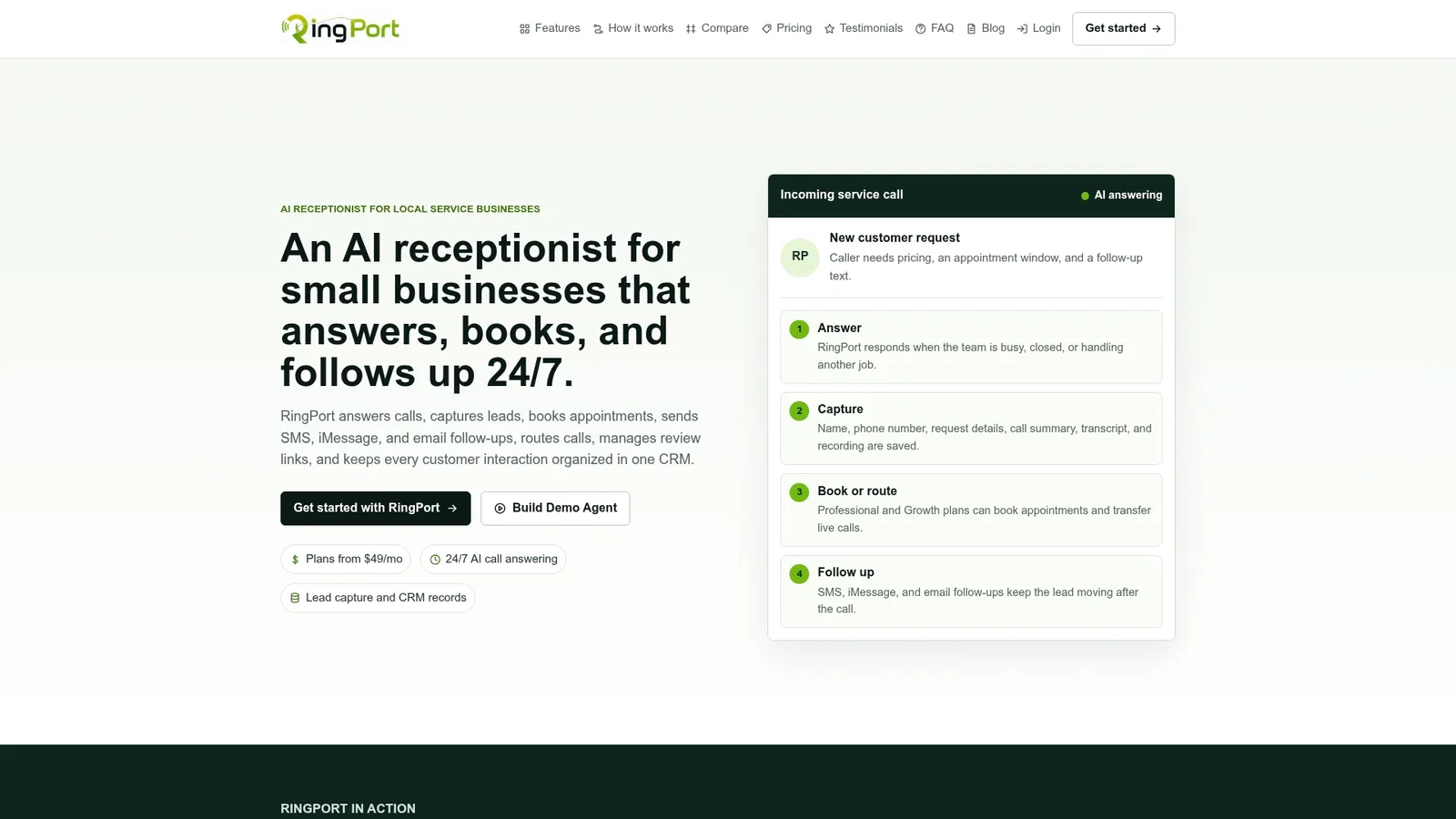
Everything above assumes someone, or something, is actually answering the phone. We built RingPort as an AI receptionist for small service businesses, including medical offices, that handles calls around the clock, books appointments directly, and keeps lead and scheduling data in one place instead of scattered across sticky notes.
For a small practice, that means fewer missed calls during lunch, fewer unanswered after-hours calls that turn into frustrated voicemails, and fewer dropped follow-ups when the front desk is slammed. Before adopting any AI answering system, confirm the same things you'd confirm with any vendor:
- A signed BAA covering any patient data the system touches.
- Clean integration with your existing scheduling or EHR platform.
- A tested escalation path back to clinical staff for anything urgent.
- Staff training on the new workflow before go-live, not after.
Pro Tip: Run any new phone technology side by side with your current process for two to four weeks before switching over completely.
A 30-Day Checklist and the Mistakes That Keep Repeating
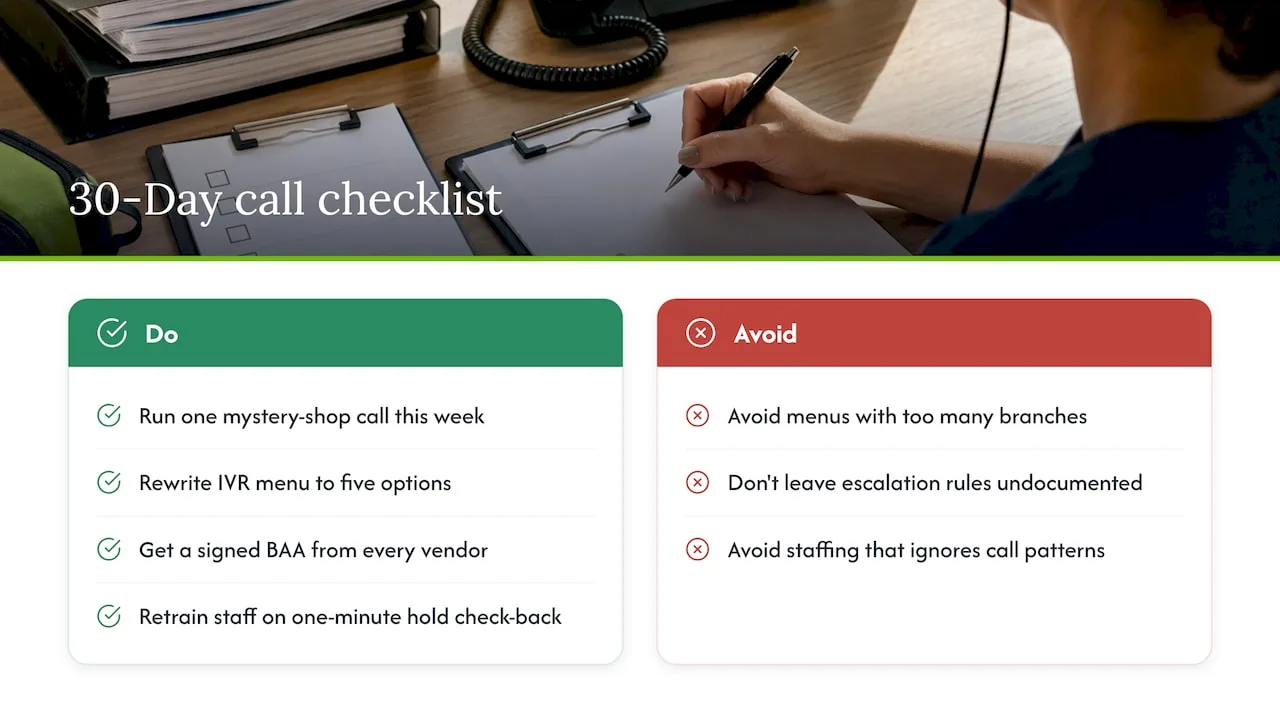
Run one mystery-shop call this week. Rewrite your IVR menu to five options with a clear path to a person. Confirm every vendor touching patient data has a signed BAA. Retrain staff on the one-minute hold check-back. Those four moves fix most of what goes wrong.
The recurring errors we see: menus with too many branches, no documented escalation rule for urgent calls, and staffing that ignores the hour-by-hour call pattern. Each is cheap to fix once you measure it. Weigh automation against added staffing by comparing cost per answered call, not cost per hour.
— Serhii
Try RingPort for Missed Calls and After-Hours Booking
We built RingPort to catch the calls your front desk can't, nights, lunch breaks, and the overlap hours when three lines ring at once. Before you pilot it, ask about BAA coverage, scheduling integration, and trial terms.
- Confirm a signed BAA before any patient data flows through the system.
- Test integration with your scheduling or EHR platform during the trial.
- Compare answer rate and booked appointments against your current baseline.
Plans start at $49 a month with Starter, scaling to Professional and Growth as call volume grows. See how RingPort's fast-agent capability handles a live call before you commit to a full rollout.
This article is general information, not a substitute for advice from a qualified doctor. Consult a qualified healthcare professional about your own circumstances before acting on anything here.
FAQ
How much does it cost to hire an answering service?
Pricing varies widely by provider and call volume, and most services don't publish flat rates publicly. For a 24/7 AI receptionist built for small offices, RingPort's Starter plan starts at $49 a month, with Professional and Growth tiers available as volume increases.
What are the 5 C's of healthcare?
Definitions of the "5 C's" vary across sources and specialties, so there isn't one universal list we can point to as canonical. Most versions emphasize communication, coordination, and continuity of care as recurring themes.
What are the duties of a medical call center representative?
A medical call center representative typically handles appointment scheduling, triage routing, refill requests, and billing questions while verifying patient identity before sharing any information. They document call outcomes in the scheduling or EHR system so clinical staff have full context on the next contact.
When a patient calls the office, what is the appropriate way to greet them?
A proper greeting confirms the practice name, the staff member's name, and asks how they can help, all within the first three rings per AHRQ guidance. Identity verification should follow immediately after, before any health information is discussed.
Sources
- Health Literacy Universal Precautions Toolkit (AHRQ)
- Hhs
- Mystery-shop audit methods for health services (PMC)