Clinics: Reduce No Shows in 30–90 Days With a Layered Automation Plan
Clinic ready roadmap to cut no shows: turn on two way confirmations, enable online self scheduling, and automate waitlist recovery in 30–90 days.
How many customers are slipping away before you can answer?
Answer 4 quick questions and get a simple missed-call estimate for your business.
Answer with one tap. Contact details come after your result.
Here is the estimate.
Thanks. Your result was received.
The fastest way to reduce no shows is a layered approach: two-way confirmations, online self-scheduling, commitment mechanisms like card-on-file, and automated waitlist recovery working together. Prioritize confirmations and self-scheduling first, since they carry the most evidence behind them. Most clinics running all four layers well land in a healthy moderate no-show range within 30 to 90 days.
TL;DR:
- Implement two-way SMS confirmations combined with multi-touch reminders to reduce no-shows by approximately 20 to 30 percent within a week.
- Use online self-scheduling for routine appointments to lower no-show rates from 5.9% to around 1.8%, especially when booking is against real-time availability.
- Deploy automation for waitlist backfill and no-show recovery outreach to significantly increase capacity and recapture revenue with minimal staff effort.
- Shortening the interval between booking and appointment to the nearest available slot greatly improves attendance, as patients are less likely to forget the visit.
- Prioritize confirming visits and enabling online scheduling before introducing cancellation fees or deposits, focusing on commitment through scheduling efficiency.
Table of Contents
- Strategies for Reducing No Shows: A Quick-Reference List
- How Should You Structure Reminder and Confirmation Cadence?
- Does Online Self-Scheduling Actually Cut No-Shows?
- What Cancellation Policies and Deposits Actually Change Behavior?
- How Do Waitlists and Same-Day Slots Recover Lost Capacity?
- How Do You Calculate and Target No-Show Risk?
- What's the Right Way to Recover a Missed Appointment?
- What Does a 30, 60, and 90 Day Rollout Look Like?
- How Automation Closes the Gaps in This Roadmap
- What I've Learned Watching Clinics Try to Fix This
- Put the Confirmation and Recovery Loop on Autopilot
- Sources
Strategies for Reducing No Shows: A Quick-Reference List
Staff don't need to read a white paper to start fixing this. Below is a ranked cheat sheet, ordered by how fast each tactic pays off relative to the effort it takes to launch.
- Two-way SMS confirmations — Quick win. Cuts no-shows meaningfully within a week of turning it on.
- Online self-scheduling — Higher effort, highest impact. Structural fix that lowers no-shows long term.
- 72h/24h/morning-of reminder cadence — Quick win. Low lift, immediate visibility gain.
- Card-on-file for high-risk appointment types — Medium effort. Reduces no-shows in cohorts with a history of missing.
- Automated waitlist backfill — Medium effort. Recovers revenue rather than preventing the miss.
- Post-no-show outreach within 24 hours — Quick win. Recaptures visits that would otherwise vanish.
- Shorter lead time between booking and visit — Higher effort. Structural, but durable.
- Same-day and extended-hour slots — Medium effort. Removes life-event barriers to attending.
- Risk-based patient segmentation — Higher effort. Multiplies the value of every tactic above it.
- Telehealth as a fallback option — Quick win where clinically appropriate.
The sections below walk through the mechanics of each, starting with the one most clinics get wrong: reminders that never ask for a reply.
How Should You Structure Reminder and Confirmation Cadence?
A reminder tells a patient about an appointment. A confirmation asks them to do something about it. That distinction is the entire reason confirmations outperform plain reminders, and most practices never build the "ask" into their workflow at all.
The evidence supports a three-touch cadence: a message 72 hours out, another at 24 hours, and a final one the morning of the visit. SMS reminders alone can reduce no-shows by roughly 20 to 30 percent compared with sending nothing, but that number climbs further once each message includes a reply option like "Text C to confirm or R to reschedule." Multi-channel, multi-touch cadences that mix SMS, email, and voice consistently outperform single-channel reminders, largely because SMS gets read faster than email and voice catches patients who ignore texts.
A staff fallback matters just as much as the automation. When a patient doesn't respond by the 24-hour mark, that appointment should route to a call-down list, not sit silently until the visit slot goes empty.
Sample confirmation text: "Hi [First Name], this is [Clinic Name] confirming your visit Thursday at 2:00 PM with Dr. [Name]. Reply C to confirm or R to reschedule."
Before rolling this out, confirm your platform's integration points:
- Two-way texting synced to your practice management or EHR system, not a standalone app
- Message templates reviewed for HIPAA-safe language (no diagnosis details, no test results)
- A defined escalation path when a patient doesn't reply within a set window
- Tracking on delivery rate and confirmation rate, not just messages sent
Pro Tip: *Track confirmation rate separately from delivery rate.
Does Online Self-Scheduling Actually Cut No-Shows?
Yes, and the effect is larger than most administrators expect. A 2025 study in Frontiers in Digital Health found a median no-show rate of just 1.8% for appointments booked online, versus 5.9% for those booked by phone. That's not a small edge. It suggests the booking channel itself changes attendance behavior, not just the reminders that follow.
The mechanism makes sense once you think it through. A patient who picks their own slot from real-time availability has already committed mentally, and rescheduling is a click away rather than a phone tag session, so fewer people simply let a bad-fit appointment slide into a no-show. Intake forms filled out during self-scheduling add another layer of commitment. The more a patient invests upfront, the more that visit feels real on their calendar.
There's a catch worth flagging before you build this out. The same research found that request-based or triage-style online booking, where a patient submits a request and staff confirm it later, can actually raise no-show rates rather than lower them. The benefit only shows up with direct booking against real-time provider availability.
Rollout steps that avoid the common traps:
- Map provider availability accurately in your EHR before opening self-scheduling to patients
- Start with a subset of appointment types (routine follow-ups, not new-patient intakes) to limit routing errors
- Pair scheduling with a short intake form to boost visit salience
- Track no-show rate by booking channel (phone vs. online vs. staff-entered) monthly
Reducing the gap between booking and visit date compounds the effect further. Implementation research found that shortening wait times measurably improved attendance in the practices studied, so pushing patients toward the earliest available real slot, rather than the next opening three weeks out, is worth building into your scheduling rules.
What Cancellation Policies and Deposits Actually Change Behavior?
A cancellation policy only works if patients see it before they book, not after they miss. Transparency at the point of scheduling, a clear notice window (typically 24 to 48 hours), and a stated fee or deposit amount all need to appear on the confirmation page or the first booking message. Buried policies generate disputes; visible ones generate compliance.
Card-on-file and deposit systems work because they raise the psychological cost of skipping a visit without confrontation. A patient who has already entered a card number has made a small commitment that a phone reminder can't replicate. This is especially useful for appointment types with historically high no-show rates, like new-patient consults or elective procedures, where the loss of a slot is expensive to the practice.
Operationally, this needs a script, not just a policy document. Front-desk staff should have a consistent line for explaining the policy at booking: something like, "We hold this slot with a card on file, and we only charge if you miss without 24 hours' notice." Documentation of that disclosure protects the clinic if a dispute comes up later.
- Start the policy with your highest no-show appointment types, not clinic-wide
- Build exceptions into the script for emergencies and first-time offenses
- Keep the deposit amount modest. It's a commitment device, not a penalty
- Log every waived fee so you can spot patterns before adjusting the policy
Pro Tip: Pilot card-on-file with one appointment type for 60 days before expanding. You'll catch patient pushback and staff scripting issues early, when they're cheap to fix.
How Do Waitlists and Same-Day Slots Recover Lost Capacity?
Manual waitlists are a leaky bucket. Front-desk staff calling down a list one patient at a time typically refill only about 15% of canceled slots, because most calls go to voicemail and staff run out of time before they reach anyone willing to come in. Automated systems that blast a one-tap "yes, I'll take that slot" notification to every eligible waitlisted patient at once recover dramatically more capacity in far less staff time.
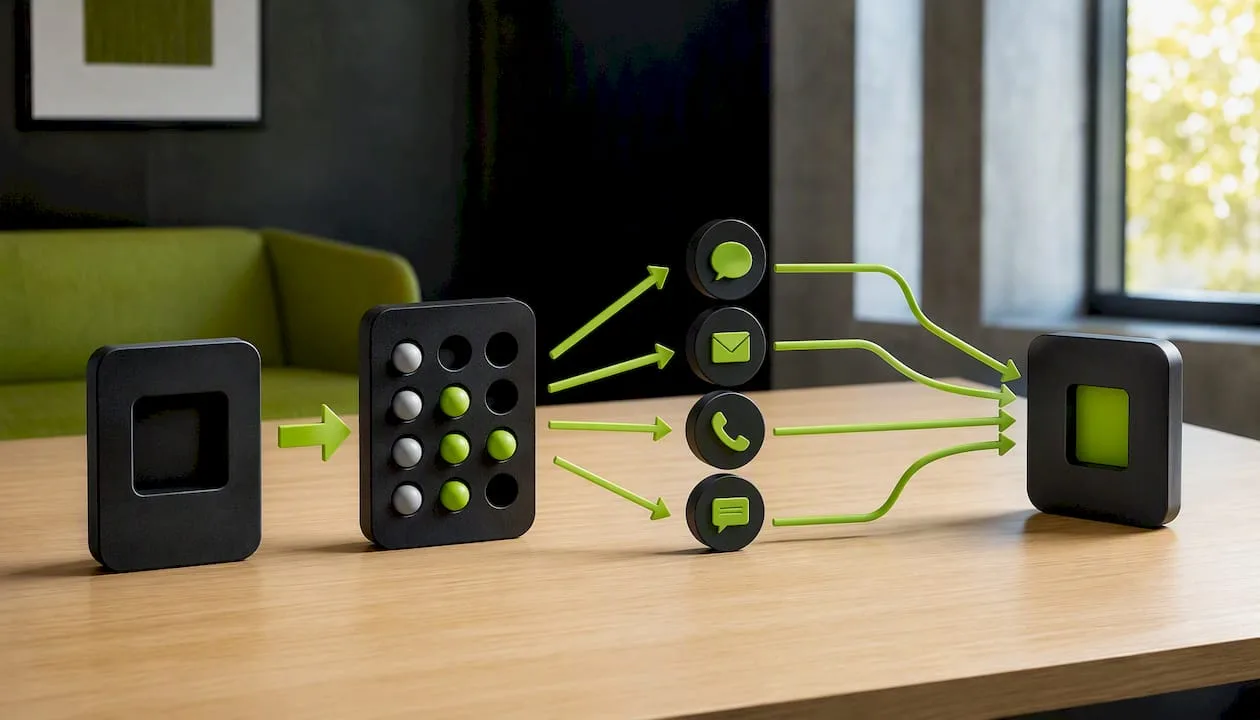
Same-day and extended-hour slots solve a different problem: the no-show caused by a life event rather than forgetfulness. A parent whose childcare fell through, or a worker whose shift ran long, is far more likely to show up if you offer them 6:00 PM instead of forcing a reschedule two weeks out. Telehealth fills a similar gap for patients facing transportation barriers or mobility limits, converting what would have been a no-show into a completed virtual visit.
A basic automated backfill workflow looks like this:
- Cancellation triggers an instant SMS/email blast to waitlisted patients matching that appointment type and provider
- First patient to respond gets the slot automatically, with the rest notified it's filled
- Unfilled slots inside a defined window (say, four hours before the visit) escalate to staff for manual outreach
- Same-day slots get flagged separately in the schedule so front desk can offer them proactively during confirmation calls
How Do You Calculate and Target No-Show Risk?
No-show rate is simple math: missed appointments divided by total scheduled appointments, times 100. The insight comes from how you slice it. Calculate the rate by provider, by service line, by day of week, and by time of day, and patterns will surface that a single clinic-wide number hides completely. A Monday-morning pediatric slot and a Friday-afternoon specialist visit rarely carry the same risk.
SMS reminders alone can cut no-show rates by 20 to 30 percent, but that number only holds when reminders are paired with a genuine confirmation and reschedule option, not sent as a one-way notice.
Predictive targeting multiplies your staff's time. Signals like prior no-show history, longer lead time between booking and visit, distance from the clinic, and insurance type can flag high-risk visits with strong accuracy, letting you concentrate live phone calls on the patients who actually need them instead of calling every name on the schedule.
- Track no-show rate weekly by provider and service line, not just monthly clinic-wide
- Flag patients with two or more prior no-shows for a live confirmation call instead of an automated text
- Set a target range (5–10%) per service line and review quarterly
- Reserve blanket outreach for new patients with no history to score against
What's the Right Way to Recover a Missed Appointment?
The 24 hour window after a no-show is when recovery is easiest, because the visit is still fresh in the patient's mind and the reason they missed it hasn't faded. Waiting a week to follow up almost guarantees the visit stays lost.
- Send the first outreach within 24 hours, by SMS first and phone second if there's no response. Speed matters more than the channel.
- Keep the message short and blame-free. "Hi [Name], we missed you today. Want to grab another spot this week?" works better than anything that sounds like a scolding.
- Offer two or three specific times, not an open-ended "call us to reschedule." Specific options convert better than vague invitations.
- Route non-responders to an automated reschedule link that pulls from real-time availability, escalating to staff only if the patient hasn't rebooked within 48 hours.
- Track rebook rate and recovered revenue per no-show monthly, so recovery efforts show up on the same dashboard as prevention.
Pro Tip: Measure recovered revenue separately from rebook rate. A high rebook rate on low-value visit types won't move your bottom line the way recovering even a handful of no-showed specialist consults will.
What Does a 30, 60, and 90 Day Rollout Look Like?
Trying to launch every tactic simultaneously overwhelms staff and muddies your data, since you won't know which change actually moved the number. A sequential rollout, measure, add one high-leverage layer, measure again, works far better in practice.
- Days 0–30: Establish your baseline no-show rate by provider and service line. Turn on two-way SMS confirmations and the 72h/24h/morning-of reminder cadence.
- Days 31–60: Enable online self-scheduling for two or three low-risk appointment types. Pilot card-on-file with your highest-risk cohort, likely new-patient consults or elective visits.
- Days 61–90: Turn on automated waitlist backfill and predictive risk flagging. Layer in 24-hour recovery outreach for any remaining no-shows. Refine cadence based on what the data shows.
Watch for two common pitfalls along the way: calendar rule mismatches, where self-scheduling opens slots that don't actually match provider availability, and patient confusion when a new policy or text cadence launches without any heads-up. A short notice on your website or a line in the first confirmation message ("We've updated how we confirm visits") heads off most of the confusion before it generates complaints.
How Automation Closes the Gaps in This Roadmap
Every tactic above depends on consistent execution, and that's exactly where small clinics run out of staff hours. An AI receptionist like Ringport operationalizes the roadmap by handling the repetitive parts automatically, so the plan doesn't collapse the first busy week.
- 24/7 call answering and booking, so a patient calling after hours to reschedule doesn't become tomorrow's no-show
- Automated two-way confirmations and reminder cadence, matching the 72h/24h/morning-of sequence without manual texting
- Waitlist and backfill automation, filling canceled slots faster than a manual call-down ever could
- No-show recovery outreach, contacting missed patients within the 24-hour window automatically
Automating routine outreach like this multiplies front-desk capacity without adding headcount, which matters most for clinics where the same two or three staff members answer phones, confirm visits, and manage the front desk simultaneously.
What I've Learned Watching Clinics Try to Fix This
Most clinics chase the wrong first move. They roll out a cancellation fee before they've fixed their reminder cadence, and then wonder why patients feel penalized instead of informed. Confirmations and self-scheduling should come first, always. They're the layers with the strongest evidence and the least patient friction.
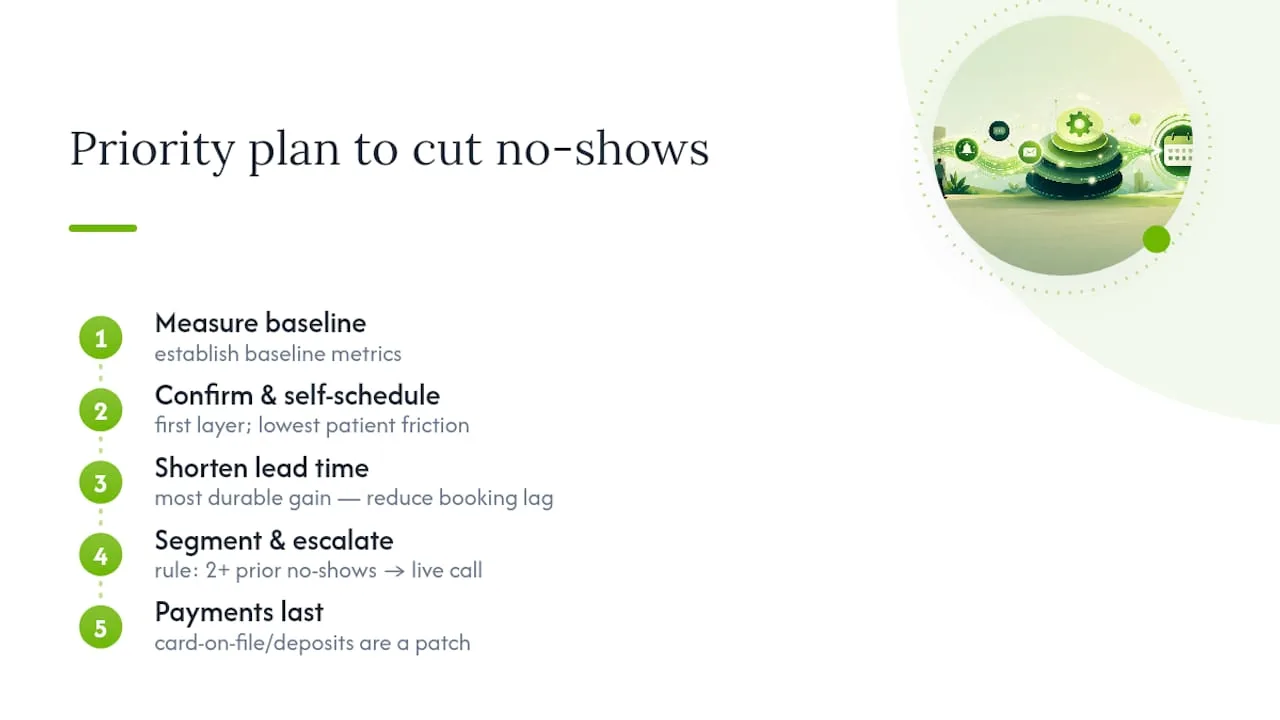
The tactic that creates the most durable gain, in my read of the evidence, isn't the one that feels the most aggressive. It's shortening the lead time between booking and visit. A patient who books today for tomorrow rarely forgets why they scheduled. A patient who books today for six weeks from now has time to lose the thread entirely. Card-on-file and deposits work, but they're a patch for weak commitment, not a fix for a scheduling system that puts too much time between the decision and the visit.
Where I'd push back on conventional advice: don't wait for a perfect predictive model before you start segmenting. A crude rule, two or more prior no-shows means a live phone call instead of a text, beats no segmentation at all, and you can refine it as your data improves. Measure the baseline, ship one layer, measure again. Clinics that skip the baseline step can't tell whether anything they did actually worked.
— Serhii
Put the Confirmation and Recovery Loop on Autopilot
Every tactic in this guide works better when nothing falls through the cracks, and that's the part most short-staffed clinics struggle with most. Ringport is built for exactly this gap: it answers every call around the clock, books appointments straight into your calendar, sends the confirmation and reminder cadence automatically, and reaches out to no-shows within the recovery window without anyone at the front desk lifting a phone.
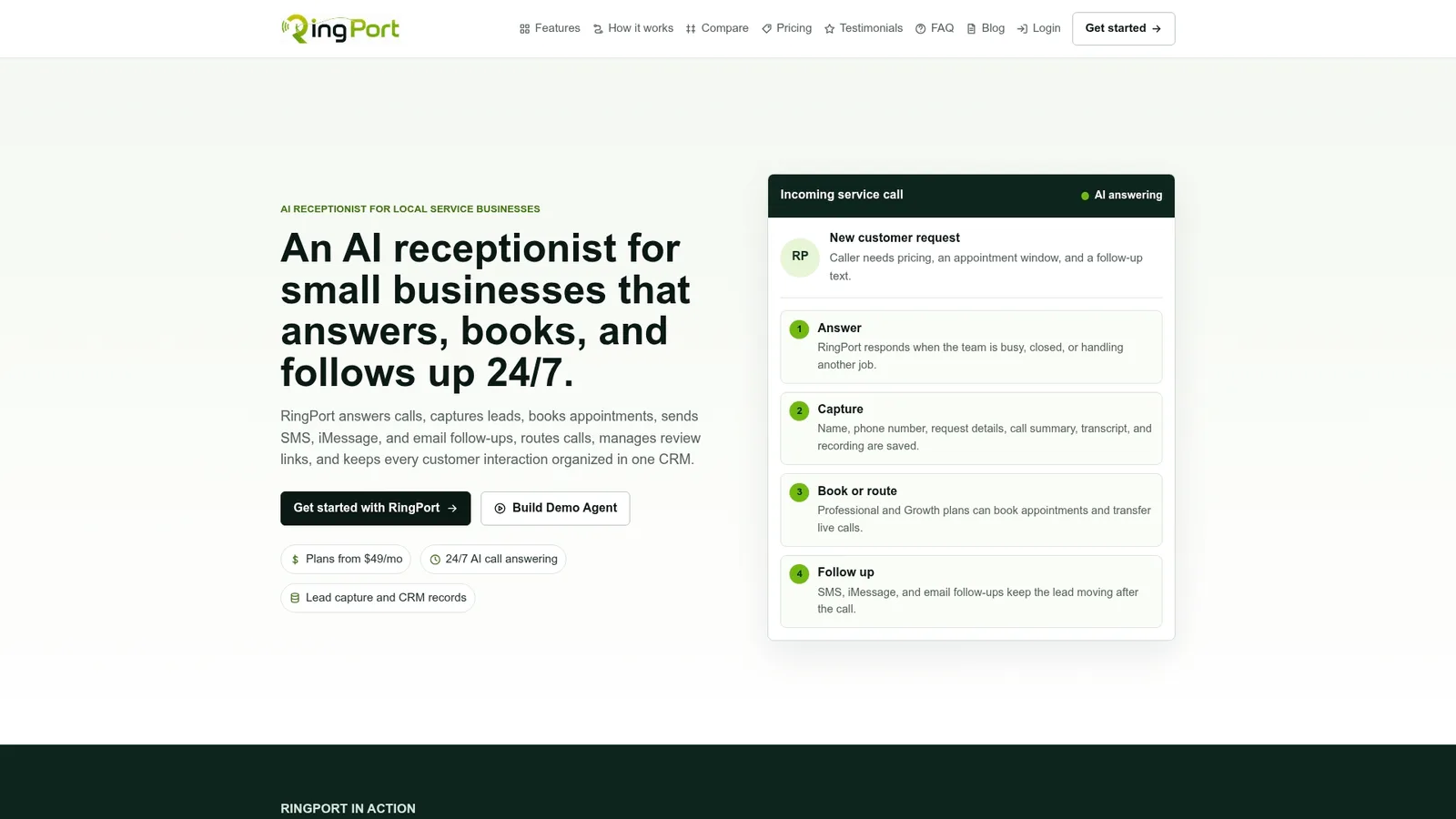
For a clinic running two front-desk staff and a full schedule, that means the waitlist gets worked the moment a slot opens, confirmations go out on the exact 72h/24h/morning-of cadence outlined above, and a missed visit gets a rescheduling text before the patient has even left the parking lot. Pairing this with a strong reminder vendor like the options covered in this SMS reminder comparison or refining your booking flow using guidance from schedule optimization research rounds out the full stack. If you want to see how it handles your specific call volume and appointment mix, start with a look at RingPort's platform and get a feel for the setup before you commit staff time to the rollout.
This article is general information, not a substitute for advice from a qualified doctor. Consult a qualified healthcare professional about your own circumstances before acting on anything here.