10–14 Day Outbound Lead Calling Playbook for Small Business
Small business playbook: run a 10–14 day outbound lead calling campaign with a one sentence objective, 15 second openers, and multichannel automated...

How many customers are slipping away before you can answer?
Answer 4 quick questions and get a simple missed-call estimate for your business.
Answer with one tap. Contact details come after your result.
Here is the estimate.
Thanks. Your result was received.
Outbound lead calling is seller-initiated phone outreach that still outperforms most other channels for fast pipeline, but only when it uses intent-driven targeting, multichannel cadences, and disciplined qualification. Random dialing off a purchased list does not work anymore. Start every program with a one-sentence objective, like "book 20 qualified consultations in 30 days," and build backward from there.
TL;DR:
- Target lists must be verified, segmented by real-time signals, and scrubbed to avoid wasting effort on unqualified or duplicate contacts.
- The opening 15 seconds rely on pattern-interrupt questions and permission checks to increase the chances of engaging prospects.
- Combining email, phone, and social touches in a structured ten-day cadence yields higher meeting rates than cold calling alone.
- Focus on key KPIs such as connect rate, conversation-to-meeting rate, and show rate, tracking weekly for optimal adjustments.
- Small businesses benefit from AI tools that automate answering, routing, and follow-up, reducing missed leads and improving booking consistency.
Table of Contents
- What Is Outbound Lead Calling, and How Is It Different From Cold Calling?
- Which Type of Outbound Call Fits Your Goal?
- How Do You Design an Outbound Calling Campaign?
- What Should You Say in the First 15 Seconds?
- How Should You Sequence Calls With Email and Other Channels?
- What KPIs Actually Matter for Outbound Calling?
- What Mistakes Quietly Sink Outbound Calling Programs?
- How RingPort Fits Into a Small Business Outbound Strategy
- What Should You Do in the Next 72 Hours?
- Is RingPort Right for Your Outbound Calling Needs?
- Where to Go Deeper on Outbound Calling
- Sources
What Is Outbound Lead Calling, and How Is It Different From Cold Calling?
Outbound lead calling is any phone outreach a business initiates to a prospect who hasn't yet asked to talk. It includes true cold calls to strangers, warm calls to people who've engaged with your content, and reactivation calls to past customers gone quiet. Inbound calling, by contrast, happens when a lead reaches out first, whether that's from a form fill, a missed-call callback, or a direct dial to your office line.
The distinction matters for how you script and staff each type. Cold outbound demands a stronger opener because you're interrupting someone's day with no prior context. Warm outbound, aimed at leads who downloaded a guide or clicked an email, lets you reference that action immediately and skip straight to relevance.
Neither replaces the other. Outbound feeds your pipeline proactively while inbound captures demand you've already generated through marketing, referrals, or search visibility. A mature demand engine runs both simultaneously, and the Salesforce lead generation framework treats calling as one tool within a larger system that includes value offers, contact capture, and structured follow-up.
Three things separate the two channels in practice:
- Outbound requires a target list and a reason to call; inbound requires only fast response.
- Outbound conversations start colder and need a permission-based opening.
- Outbound scales with dialer technology; inbound scales with speed-to-lead discipline.
Which Type of Outbound Call Fits Your Goal?
Not every outbound call serves the same purpose, and using the wrong type on the wrong list wastes hours. Here's how the four main categories break down:
- Cold calling targets prospects with no prior contact, usually built from firmographic or intent data. It fits net-new pipeline generation for sales development reps working a fresh territory.
- Warm calling reaches people who've already interacted with your brand, such as a webinar attendee or a whitepaper download. Marketing-sourced leads convert far better here because the rep can reference specific behavior.
- Reactivation calling revives dormant accounts or past customers who went quiet. Account managers or customer success reps typically own this, since context and history already exist.
- Appointment setting calls exist purely to book a meeting, not close a deal. This fits high-ticket B2B sales where a specialist needs a live demo to move the deal forward.
A service business running seasonal promotions, for example, might use reactivation calls on last year's customer list right before their busy season starts, while a growing SaaS company runs cold calls against a new vertical it's entering for the first time.
How Do You Design an Outbound Calling Campaign?
Every outbound calling strategy needs a written objective before a single dial happens. A campaign without a defined goal, timeframe, and cost target tends to drift into busywork, and reps lose motivation fast when there's no scoreboard.
- Set the objective template. Write it as: goal (e.g., 15 booked demos), timeframe (30 days), KPI (meeting-booked rate), and cost target (cost per booked meeting).
- Build your ICP with layered intent signals. Start with firmographic basics (industry, size, location), then add behavioral signals like recent funding, job postings, or website visits. The Clay guide to B2B lead generation argues that tiering accounts by real-time buying signals multiplies conversion compared with static lists pulled once and used for months.
- Run list hygiene before the first call. Scrub for duplicate records, verify phone numbers are current, and check every number against the National Do Not Call Registry before dialing.
- Confirm compliance guardrails. Under the Telephone Consumer Protection Act, businesses calling U.S. consumers face restrictions on autodialed and prerecorded calls to cell phones without prior consent, and state-level rules can add stricter limits. Review current requirements with legal counsel before launching any automated outbound program.
- Document your dialer mode and script variant before the campaign starts, not after the first hundred calls.
List quality remains the single biggest performance lever in outbound, more than script quality or rep skill, according to Call Logic's campaign structuring guide.
Pro Tip: Build your ICP filter to exclude any account that already has an open deal or a recent support ticket. Calling a frustrated existing customer with a cold sales pitch undoes weeks of goodwill in ninety seconds.
What Should You Say in the First 15 Seconds?
The opening moments of an outbound call decide whether the prospect stays on the line, and generic openers like "How are you today?" signal a script and trigger an instant hang-up reflex. Pattern-interrupt openers work because they break the expected rhythm of a sales call, according to HubSpot's cold calling guide, which notes that acknowledging the interruption directly tends to disarm prospects rather than annoy them.
A few opener patterns that outperform the standard script:
- "I know I'm catching you out of the blue. Do you have a moment for me to tell you why I called?"
- "This is a cold call. Want me to skip the pitch and get straight to it?"
- "I'll be quick. Can I ask you one question before you decide if this is worth your time?"
Once you've earned attention, ask a permission-check question before launching into your pitch: "Is now a genuinely bad time, or can I take two minutes?" This respects the prospect's control and, counterintuitively, increases the odds they'll actually listen once they've agreed. For a good example of a natural, credible warm call opener, reference the specific action that triggered the call, like a downloaded guide, within the first sentence.
Structure the talk track in four beats: opener, permission check, one qualifying question tied to a pain point, and a clear next step. Partner resources on the psychology of first impressions in outbound reinforce why those first seconds carry more weight than anything said afterward.
Pro Tip: If a prospect agrees to a meeting on the call, confirm the calendar invite before you hang up. Playbooks report this single habit lifts show rates significantly, according to QUOTA Training's cold calling guide.
How Should You Sequence Calls With Email and Other Channels?
Phone alone rarely carries a full outbound sequence anymore. Email scales as the backbone of outreach, while calls timed around a specific signal, like an email open or a content click, convert at noticeably higher rates than blind dials, per the DemandNexus outbound appointment setting playbook, which also found that combining email, phone, and LinkedIn touches books 24 to 40 percent more meetings than email-only sequences.
A workable ten-day cadence looks like this:
- Day 1: Intro email introducing the value proposition.
- Day 2: First call attempt, referencing the email sent the day before.
- Day 4: LinkedIn connection request with a short personalized note.
- Day 6: Second call attempt plus a follow-up email if no answer.
- Day 9: Final call attempt with a direct voicemail asking for a callback.
Dialer mode should match list quality. Power dialers, which auto-dial the next number the moment a rep hangs up, suit high-confidence lists where every number is verified. Preview dialers, which show rep details before connecting, work better on mixed-quality lists. Predictive dialers, which use algorithms to dial ahead of agent availability, amplify errors on bad lists, so Call Logic's guidance recommends reserving predictive dialing for large, clean, high-volume lists only.
A minimal reliable stack needs four pieces: a CRM to track every touch, a dialer with call recording, a data enrichment tool to layer intent signals, and a system to log outcomes automatically so reps aren't manually updating spreadsheets between calls.
What KPIs Actually Matter for Outbound Calling?
Four numbers tell you almost everything about outbound calling program health: connect rate, conversation-to-meeting rate, meeting-booked rate, and show rate. Track them weekly, not monthly, because outbound performance drifts fast when a script goes stale or a list ages.
- Connect rate measures how many dials reach a live human. Most cold-calling programs see connections cluster on the fourth through eighth attempt, not the first, per QUOTA Training's benchmarks.
- Conversation-to-meeting rate shows how well your qualifying questions and pitch convert an engaged prospect into a booking.
- Show rate measures how many booked meetings actually happen, and it's the metric most damaged by a weak confirmation process.
- Cost per booked meeting rolls everything together into one number leadership actually cares about.
When testing script or timing changes, isolate one variable at a time and run it against a defined batch, such as 200 calls, before declaring a winner, a discipline Call Logic's campaign guide recommends over gut-feel adjustments. Hold a weekly call review where reps listen to two recorded calls together, and reserve monthly reviews for cadence-level and list-source performance.
What Mistakes Quietly Sink Outbound Calling Programs?
Spray-and-pray dialing against an unverified list is the most common failure point, and it's almost always a symptom of skipping the ICP work covered earlier rather than a rep problem. Fix the list before you fix the script.
- Don't dial the same non-responder more than a handful of times within a short window; excessive redialing damages number reputation and answer rates over time.
- Build in a re-engagement window (60 to 90 days) before recontacting anyone who explicitly declined interest.
- Train reps with role-play sessions weekly, not once during onboarding, and record real calls for review rather than relying on self-reported feedback.
- Leave a specific, benefit-oriented voicemail every time rather than a generic "please call me back."
- Always confirm the calendar invite live on the call before hanging up, and follow with a text reminder closer to the meeting time.
How RingPort Fits Into a Small Business Outbound Strategy
Most local service businesses running outbound calling don't have a dedicated SDR team. They have an owner or office manager splitting time between calling leads, answering the phone, and running the actual business, which means calls get missed and follow-ups slip.
An AI receptionist tool addresses that gap directly by mapping to the operational points where small teams lose leads:
- 24/7 automated answering catches calls that come in while your team is out dialing prospects.
- Smart call routing sends inbound callbacks from your outbound efforts to the right person instead of voicemail.
- CRM sync keeps every outbound touch and inbound response logged in one place automatically.
- Automated follow-up via SMS and email keeps leads warm between call attempts without manual work.
The practical outcome is fewer missed leads, more consistent follow-through, and a booking process that doesn't depend on someone remembering to call back.
What Should You Do in the Next 72 Hours?
Start with one page: define your ICP in a single paragraph, then run one focused 10 to 14 day outbound sequence against it before building anything bigger. Block a daily power hour for dialing, and hold a 15-minute call review every Friday to catch script drift early.
Don't treat outbound as a replacement for inbound investment. The strongest small business programs I've seen run both in parallel: outbound for control over pipeline timing, inbound for capturing demand you've already earned. Neglect either one and you're leaving revenue on the table that the other channel would have caught.
— Serhii
Is RingPort Right for Your Outbound Calling Needs?
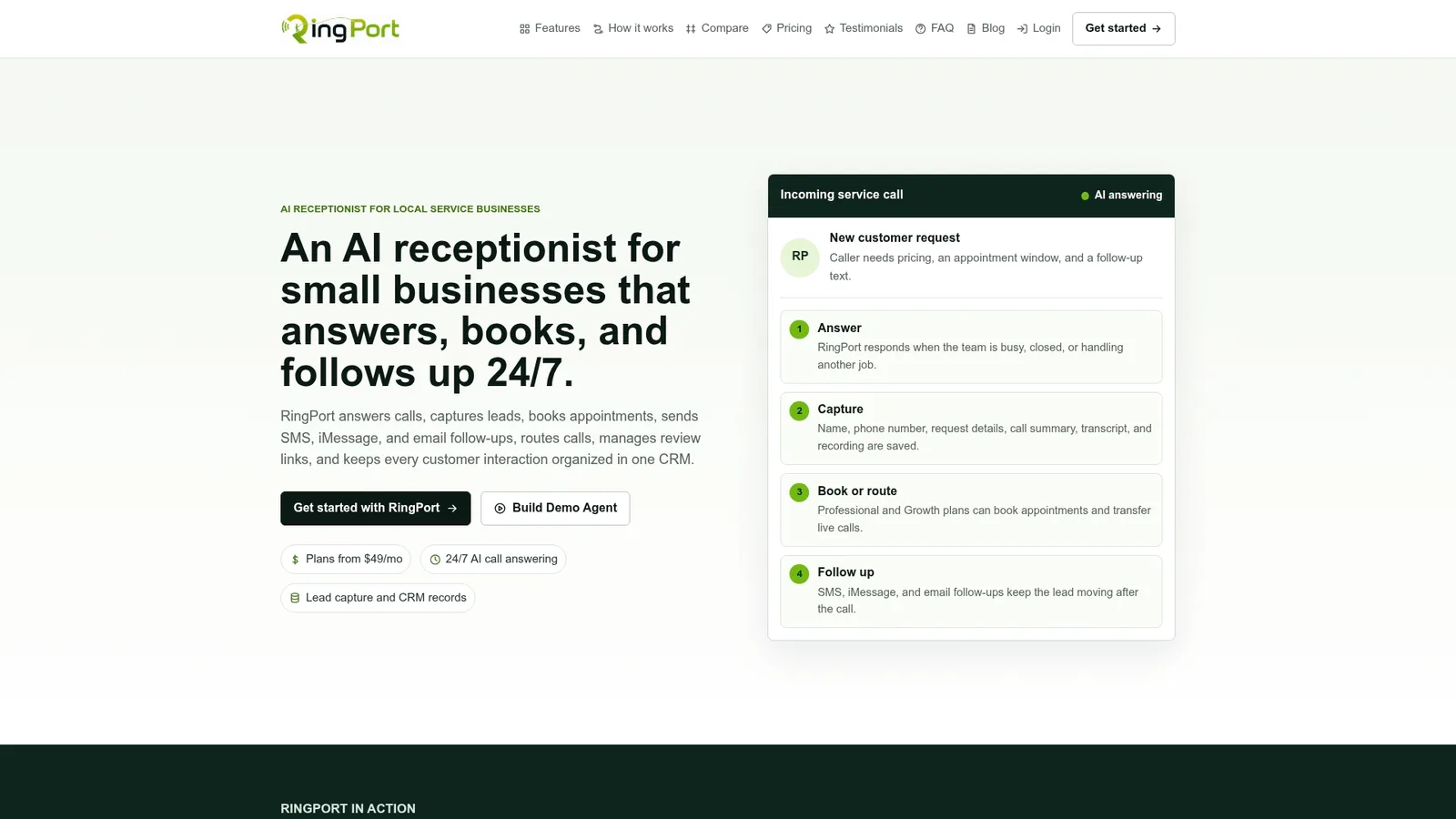
If your team spends more time chasing missed callbacks and reformatting spreadsheets than actually talking to prospects, A suitable automated system gives you the backbone that outbound calling depends on: consistent answering, routing, and follow-up without hiring a full-time receptionist. It fits solo operators and small service teams best, whether you're running a home services business, a salon, or a medical office juggling outbound campaigns alongside daily call volume.
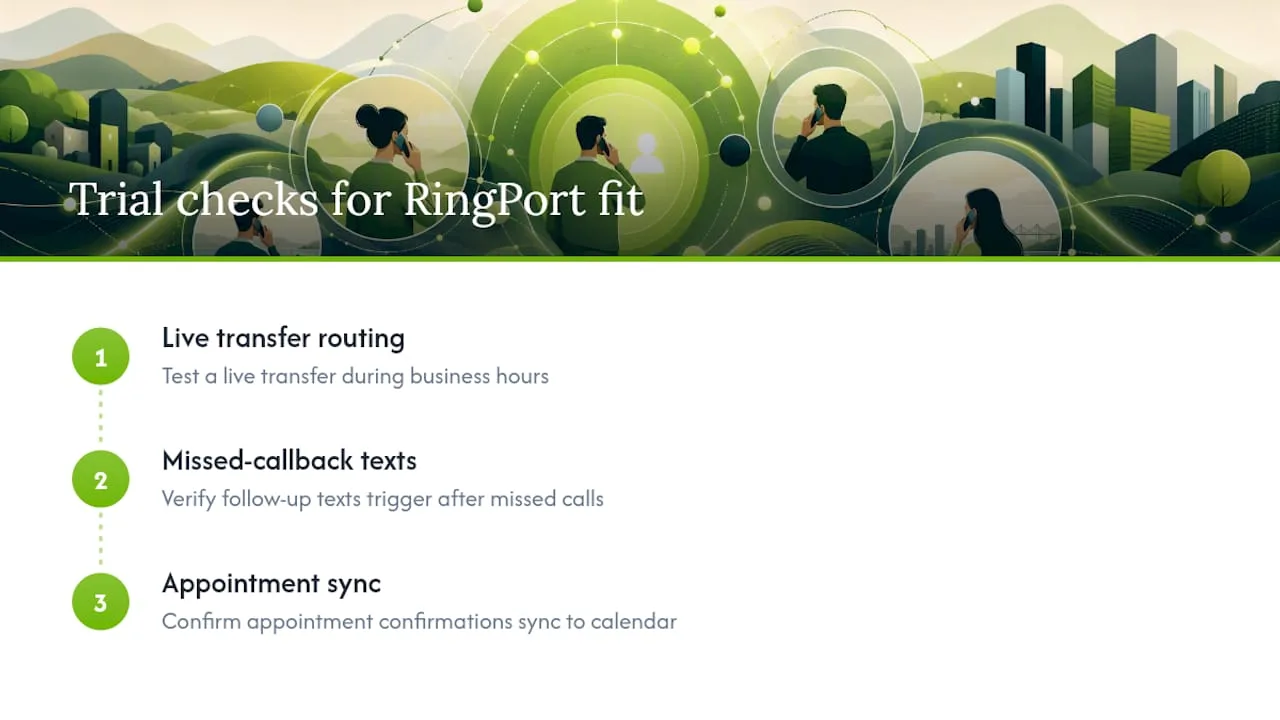
Before committing, test three things during a trial: how the system routes a live transfer during business hours, whether follow-up texts trigger correctly after a missed outbound callback, and how appointment confirmations sync back to your calendar. Those three checks tell you almost everything about fit within a week.
Start by exploring what RingPort Fast Agent handles automatically, or visit the RingPort homepage to see current plans and start a trial.
Where to Go Deeper on Outbound Calling
For readers who want to build out testing protocols, cadence design, or ICP frameworks beyond what fits here, these sources go further into the mechanics:
- HubSpot's cold calling guide for opener scripts and permission-based frameworks.
- DemandNexus's outbound appointment setting playbook for multichannel cadence benchmarks.
- Call Logic's campaign structuring guide for dialer selection and list hygiene steps.
- QUOTA Training's 2026 cold calling guide for connection-attempt benchmarks and power-hour scheduling.
- Salesforce's lead generation guide for how outbound fits into a broader demand funnel.
Use these to dig deeper on testing, cadence design, and ICP building before scaling any single tactic covered above.
Sources
- How to cold call (HubSpot sales blog)
- How to structure an outbound call campaign that actually converts — Call Logic
- Cold calling guide 2026 — QUOTA Training
- Lead generation guide — Salesforce